The Best F1 Circuits in the World Ranked
From the forests of the Ardennes to the harbour of Monte Carlo — these are the tracks that make Formula 1 the greatest show on earth.
Formula 1 visits some of the most spectacular locations on the planet. Across the 24 races on the 2026 calendar, drivers push themselves to the absolute limit on circuits that range from purpose-built temples of speed to narrow street circuits carved through city centres. Each track has its own personality, its own rhythm, and its own place in motorsport history.
But not all circuits are created equal. Some produce legendary races year after year. Others look spectacular but deliver processional Sundays. Some have been on the calendar since the very first World Championship in 1950; others are new additions still earning their place in the sport’s story.
So which are the best? We’ve ranked the greatest F1 circuits in the world — based on the quality of racing they produce, the drama of their layouts, the atmosphere they generate, and their place in Formula 1 history.
1. Spa-Francorchamps, Belgium — The Cathedral of Speed
There is no debate. Spa-Francorchamps is the greatest racing circuit ever built.
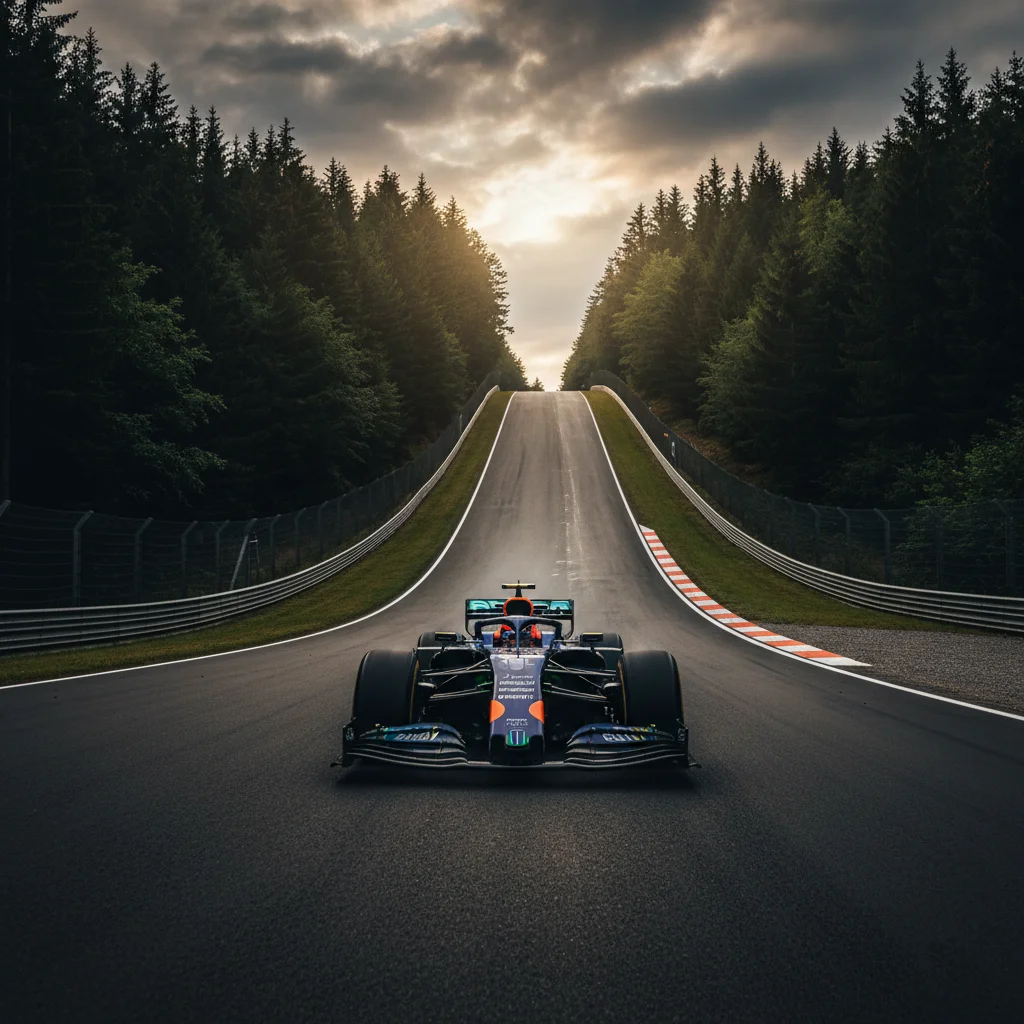
Nestled in the Ardennes forest of eastern Belgium, Spa is a 7.004km monster that climbs, plunges, and sweeps through pine-covered hills with a ferocity that no other circuit on the calendar can match. It features arguably the most famous corner in motorsport — Eau Rouge/Raidillon, a terrifyingly fast uphill left-right-left compression taken at over 300km/h where courage and car balance are tested in equal measure.
The circuit is so long and so exposed to the Ardennes microclimate that it can be raining at one end while bone dry at the other — a phenomenon that has produced some of F1’s most dramatic moments. Ayrton Senna won his second-ever Grand Prix here in 1985 in torrential rain. Michael Schumacher announced himself with a stunning debut at Spa in 1991 driving for Jordan. Lewis Hamilton has won here four times, including his 105th and final victory in 2024.
Spa is now a semi-permanent fixture on the F1 calendar, alternating with Barcelona from 2028 onwards — making every race here feel even more precious. When the cars blast through Eau Rouge for the first time on a Saturday afternoon, the roar echoing off the hillsides, you understand exactly why drivers, teams, and fans call this place sacred.
Circuit length: 7.004 km | Turns: 19 | First F1 race: 1950 | Lap record: 1:46.286 (Valtteri Bottas, 2018)
2. Circuit de Monaco, Monte Carlo — The Jewel in the Crown
Monaco has no right to be on the F1 calendar. The streets are too narrow, the barriers too close, the overtaking opportunities virtually non-existent. By modern racing standards, it should have been dropped decades ago.
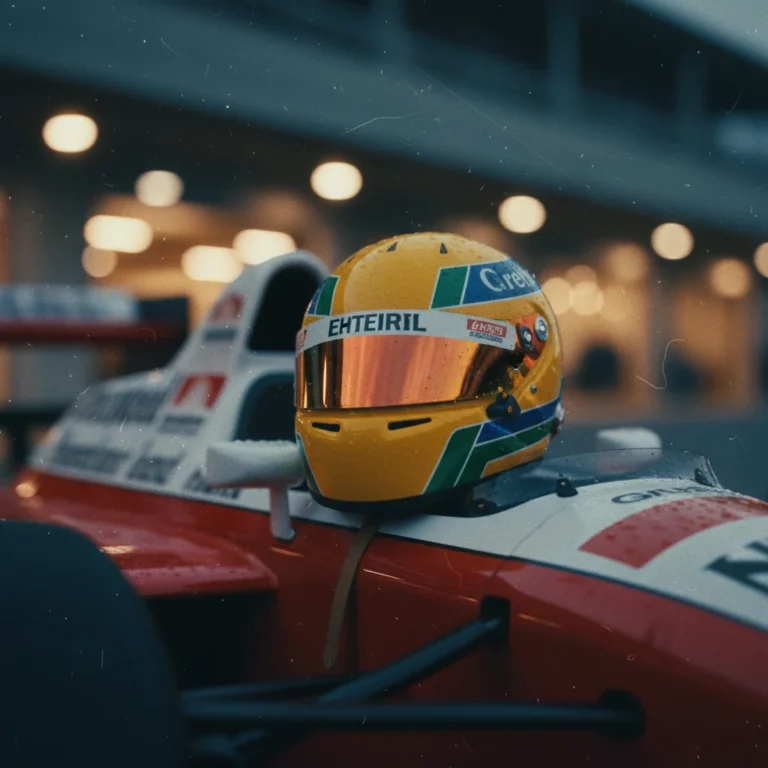
And yet it remains the most prestigious race in the world. Winning at Monaco is the benchmark by which drivers measure their careers. Ayrton Senna won here six times — a record that still stands — earning him the title “King of Monaco.” In 2025, current drivers like Isack Hadjar wore special helmets honouring Senna’s Monaco legacy, and every F1 driver on the grid has spoken about what winning here would mean to them.
The challenge of Monaco isn’t about top speed — it’s about precision, bravery, and threading a car through gaps that barely exist, at speeds that would make most people physically ill. The Swimming Pool chicane, the tunnel exit into the sunlight, the tight left-hander at the Fairmont Hotel — these are corners where millimetres separate a clean lap from a shattered front wing.
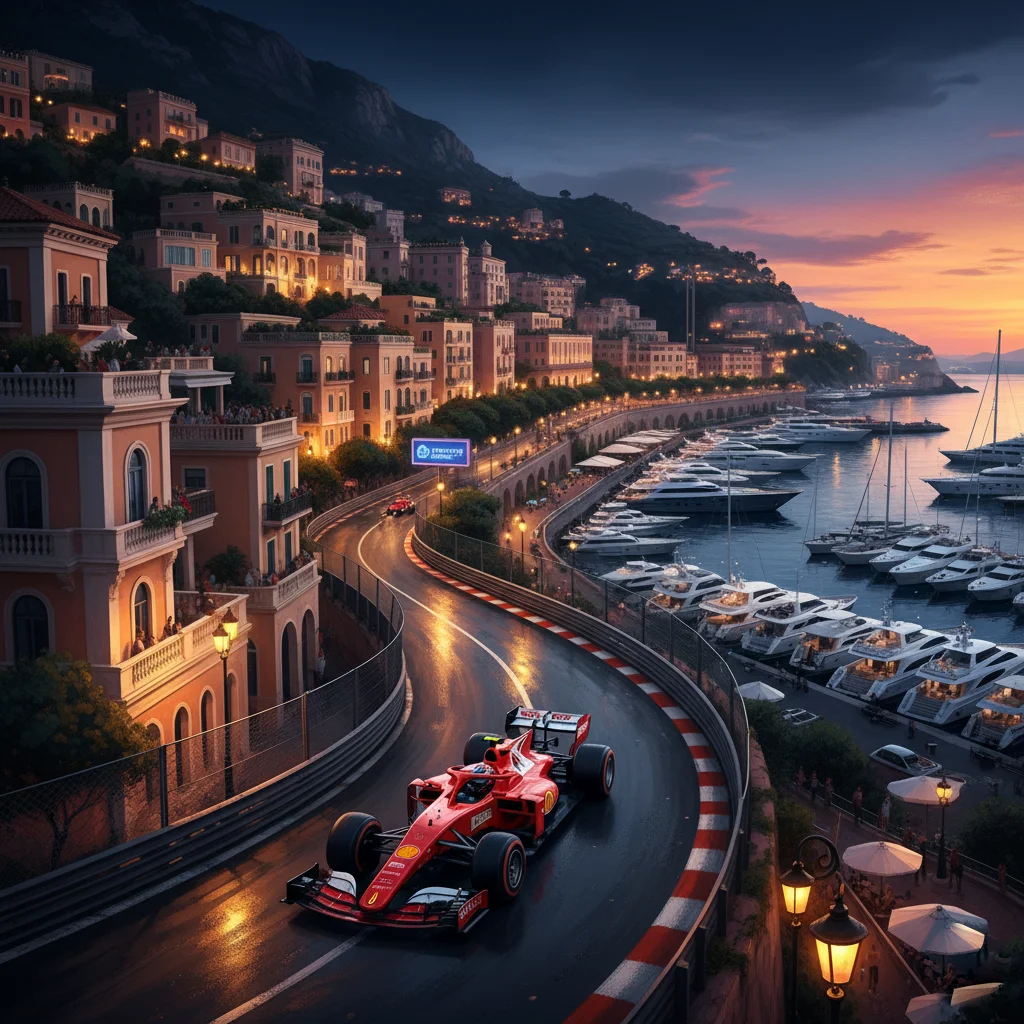
The atmosphere is unlike anything else in sport. Superyachts fill the harbour, the sound of F1 engines reverberates off apartment buildings, and the entire Principality transforms into the world’s most exclusive grandstand.
Circuit length: 3.337 km | Turns: 19 | First F1 race: 1950 | Lap record: 1:12.909 (Lewis Hamilton, 2021)
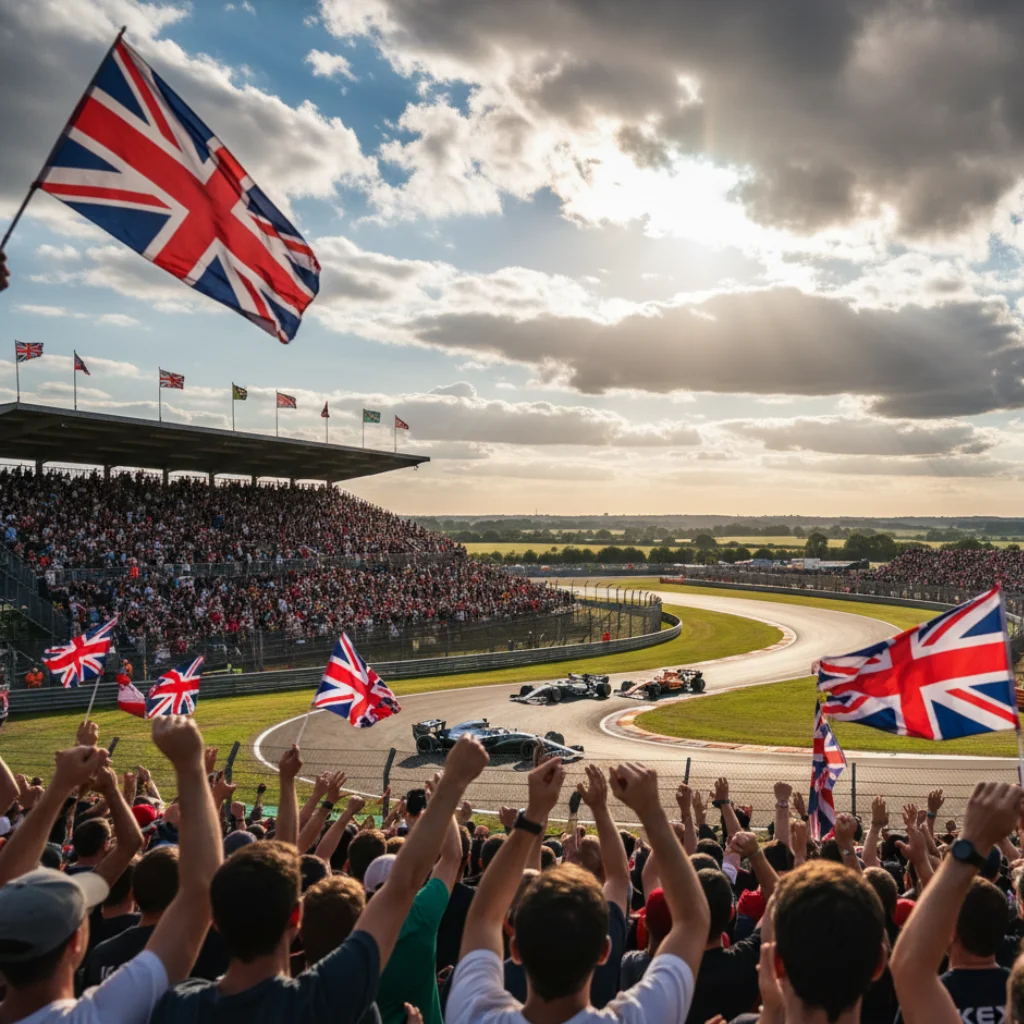
3. Silverstone, Great Britain — Where It All Began
Silverstone is the birthplace of Formula 1. The very first World Championship race was held here on 13 May 1950, and the circuit has been a constant presence on the calendar ever since — making it the longest-serving venue in the sport’s history.
Set on a former Royal Air Force airfield in Northamptonshire, Silverstone is a high-speed, flowing circuit defined by its fast corners — Maggotts, Becketts, and Chapel form a sequence so fast and so physically demanding that they separate the good drivers from the truly great. The British Grand Prix regularly produces some of the best racing of the year, helped by a passionate crowd of over 400,000 across the weekend — the largest attendance of any sporting event in the UK.
Hamilton has won at Silverstone nine times — more than any driver at any circuit in F1 history. His emotional victory in 2024, after 945 days without a win, is one of the most celebrated moments in the sport’s recent history. Nigel Mansell‘s famous 1992 triumph — where fans invaded the track on the final lap — remains one of the iconic images of British motorsport.
Silverstone is also a Sprint venue for 2026, meaning fans get competitive action across the entire weekend. For sheer atmosphere, history, and quality of racing, it’s virtually untouchable.
Circuit length: 5.891 km | Turns: 18 | First F1 race: 1950 | Lap record: 1:27.097 (Max Verstappen, 2020)
4. Suzuka, Japan — The Driver’s Circuit
Ask any racing driver which circuit they’d choose to drive if they could only pick one, and the overwhelming majority will say Suzuka. The Japanese Grand Prix is the drivers’ favourite — and it’s not hard to see why.
Suzuka is the only figure-of-eight circuit on the F1 calendar, with the track crossing over itself via a bridge between Turns 8 and 9. The first sector is a relentless sequence of high-speed esses — S-Curves that flow into Dunlop, then into Degner 1 and 2 — where the car is at maximum aerodynamic load and the driver has zero time to breathe. It’s the most physically demanding opening sector in Formula 1.
The circuit has hosted some of the sport’s most dramatic championship deciders. Senna and Alain Prost collided here in both 1989 and 1990 — two of the most controversial moments in F1 history. Sebastian Vettel clinched two of his four titles at Suzuka, and Max Verstappen won his second championship here in 2022. The Japanese fans are legendary — they camp outside the circuit for days, create elaborate driver artworks, and applaud every car regardless of team.
Circuit length: 5.807 km | Turns: 18 | First F1 race: 1987 | Lap record: 1:30.983 (Lewis Hamilton, 2019)
5. Autodromo Nazionale Monza, Italy — The Temple of Speed
Monza is Formula 1 at its most primal. Built in 1922 in a royal park north of Milan, the Italian Grand Prix is the fastest race on the calendar — with average lap speeds exceeding 260km/h and cars running minimal downforce to maximise straight-line speed. The long blasts down the back straight and through the Parabolica are some of the most exhilarating moments in motorsport.
But Monza’s appeal isn’t just about speed — it’s about passion. The tifosi, Ferrari‘s fanatical Italian fans, create an atmosphere that no other circuit can match. When a Ferrari wins at Monza — as Charles Leclerc did in 2019 — the scenes on the podium are unlike anything else in sport. Red flares, deafening noise, tears, and tens of thousands singing in unison.
Monza has been on the calendar since 1950 and has hosted more Grands Prix than any other circuit. The ghosts of Ascari, Lauda, Senna, and Schumacher are everywhere. The old banked oval — now abandoned and overgrown — is still visible from the modern circuit, a haunting reminder of the sport’s dangerous past.
Circuit length: 5.793 km | Turns: 11 | First F1 race: 1950 | Lap record: 1:21.046 (Rubens Barrichello, 2004)
6. Interlagos, São Paulo, Brazil — The Spiritual Home of the Sport
No circuit in the world carries more emotional weight than Interlagos. Named officially Autódromo José Carlos Pace, the Brazilian circuit sits in the southern suburbs of São Paulo and has produced more unforgettable moments per square metre than anywhere else on earth.
The track runs anti-clockwise, dropping dramatically through a series of sweeping curves before climbing back up to the start-finish straight. The elevation changes, the bumpy surface, and the unpredictable weather create a circuit that rewards bravery and punishes hesitation.
Interlagos was where Hamilton won his first World Championship in 2008 — passing Timo Glock on the final corner of the final lap. It was where Senna won his first home race in 1991, crossing the line stuck in sixth gear with tears streaming down his face. It was where Hamilton drove Senna’s McLaren-Honda MP4/5B in 2024, waving a Brazilian flag in tribute to his hero.
The crowd at Interlagos is the most passionate in Formula 1. They don’t just watch — they participate, singing, chanting, and willing their heroes forward. The annual Ayrton Senna Racing Day at Interlagos drew over 11,000 participants in 2025, with fans from nine countries making the pilgrimage.
Circuit length: 4.309 km | Turns: 15 | First F1 race: 1973 | Lap record: 1:10.540 (Valtteri Bottas, 2018)
7. Circuit of the Americas, Austin, USA — The Modern Classic
COTA was the first purpose-built Formula 1 circuit in the United States, and it’s proven to be one of the best additions to the calendar in decades. The 5.5km layout draws inspiration from the greatest corners in the world — a blind uphill Turn 1 inspired by Silverstone’s Becketts, a fast multi-apex section echoing Suzuka’s esses, and a long back straight with a heavy braking zone that generates overtaking.
The United States Grand Prix has become one of the highlights of the season. Attendance regularly exceeds 400,000 across the weekend, with the Austin crowd bringing an energy and enthusiasm that has revitalised American interest in F1 — aided enormously by the Netflix series Drive to Survive.
Hamilton has won at COTA more than any other driver, clinching multiple World Championships at the Texas venue. The track’s excellent facilities, reliable weather, and proximity to Austin’s vibrant food and music scene make it a favourite among teams and fans alike.
Circuit length: 5.513 km | Turns: 20 | First F1 race: 2012 | Lap record: 1:36.169 (Charles Leclerc, 2019)
8. Marina Bay, Singapore — The Night Race Spectacle
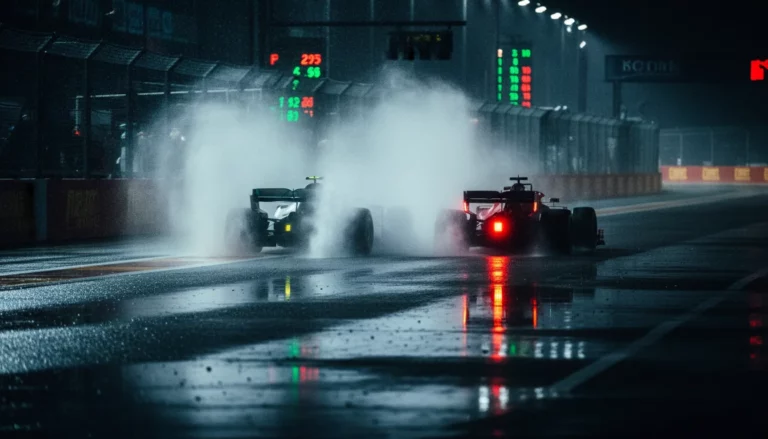
When F1 introduced its first night race at Singapore in 2008, it changed the sport’s visual identity forever. The cars look entirely different under floodlights — the sparks, the reflections, the glow of brake discs through the darkness — and Singapore remains the most photogenic race on the calendar.
The Marina Bay Street Circuit is also one of the most physically demanding. The combination of tropical heat, extreme humidity, and a bumpy street surface with 23 corners makes it one of the toughest endurance tests of the year. Drivers regularly lose several kilograms during the race and describe the final laps as an exercise in pure willpower.
Singapore is a Sprint venue for 2026, meaning even more competitive action under the lights. The backdrop — the Marina Bay Sands hotel, the Singapore Flyer, and the city skyline glittering across the harbour — makes it one of the most visually stunning events in all of sport.
Circuit length: 4.940 km | Turns: 23 | First F1 race: 2008 | Lap record: 1:35.867 (Lewis Hamilton, 2023)
9. Jeddah Corniche Circuit, Saudi Arabia — The Fastest Street Circuit
The Jeddah Corniche Circuit is the fastest and most terrifying street circuit in Formula 1. Carved along the Red Sea coastline, the track features 27 corners — many of them blind, high-speed sweepers taken at over 250km/h with concrete walls inches from the car’s wheels.
The average speed at Jeddah is higher than at most permanent circuits, let alone street tracks. Drivers have described it as exhilarating and terrifying in equal measure — a circuit where the margins are razor-thin and the consequences of any mistake are severe. The layout has been refined since its debut in 2021, but it retains its fundamental character: fast, narrow, and unforgiving.
Lando Norris and McLaren have been strong contenders here, and the circuit has already produced several dramatic races in its short history. Love it or fear it, Jeddah delivers spectacle.
Circuit length: 6.174 km | Turns: 27 | First F1 race: 2021 | Lap record: 1:30.734 (Lewis Hamilton, 2021)
10. Circuit Gilles Villeneuve, Montreal, Canada — The People’s Circuit
Named after the legendary Gilles Villeneuve — the fearless Ferrari driver who embodied the spirit of racing like few others — the Montreal circuit sits on an island in the middle of the St Lawrence River, surrounded by parkland and accessible by metro.
The layout is defined by its long straights connected by tight chicanes, making it one of the hardest circuits on brakes. The infamous “Wall of Champions” at the final chicane — so named because it has claimed Schumacher, Hill, and Villeneuve in a single race — punishes even the slightest error. Cars run low-downforce setups similar to Monza, producing high straight-line speeds and frequent overtaking.
The Canadian Grand Prix has been moved to an earlier slot for 2026, following directly after Miami to improve freight logistics. Montreal’s atmosphere is legendary — the city embraces the race weekend with a festival energy that transforms the entire island into a celebration of motorsport.
Fernando Alonso and Carlos Sainz have both delivered memorable performances here, and the circuit’s proximity to water and greenery makes it one of the most picturesque settings on the calendar.
Circuit length: 4.361 km | Turns: 14 | First F1 race: 1978 | Lap record: 1:13.078 (Valtteri Bottas, 2019)
Honourable Mentions
Bahrain International Circuit — The desert venue where the new era begins each year. Night racing under floodlights in the Gulf, with F1’s only outer-loop layout occasionally used for variety.
Hungaroring, Budapest — Often called “Monaco without the walls.” Tight, twisty, and difficult to overtake — but Hamilton has won here a record eight times.
Red Bull Ring, Spielberg — Short, fast, and set in the stunning Styrian Alps. Home of Red Bull Racing and a crowd that creates an incredible atmosphere for Verstappen.
Zandvoort, Netherlands — Banked corners, narrow layout, and a sea of orange Dutch fans. It leaves the calendar after 2026, making its remaining races all the more special.
Las Vegas Strip Circuit — The newest addition to the calendar. Cars blast past the Bellagio fountains and under the neon glow of the Strip at speeds exceeding 340km/h. Pure spectacle.
Madrid (NEW for 2026) — The Spanish capital joins the calendar with a 5.4km semi-permanent circuit around the IFEMA convention centre. Twenty-two corners and a fresh challenge for every team.
| # | Circuit | Country | Type | Length | Turns | Since | Signature Corner |
|---|---|---|---|---|---|---|---|
| 1 | Spa-Francorchamps | 🇧🇪 Belgium | Permanent | 7.004 km | 19 | 1950 | Eau Rouge/Raidillon — 300km/h uphill compression. The most famous corner in motorsport |
| 2 | Circuit de Monaco | 🇲🇨 Monaco | Street | 3.337 km | 19 | 1950 | Swimming Pool chicane — millimetre precision at 160km/h between concrete walls |
| 3 | Silverstone | 🇬🇧 Great Britain | Permanent | 5.891 km | 18 | 1950 | Maggotts-Becketts-Chapel — high-speed esses that separate the best from the rest |
| 4 | Suzuka | 🇯🇵 Japan | Permanent | 5.807 km | 18 | 1987 | S-Curves (130R) — relentless high-speed esses. Drivers’ favourite first sector in F1 |
| 5 | Monza | 🇮🇹 Italy | Permanent | 5.793 km | 11 | 1950 | Parabolica (Alboreto) — flat-out sweeper at 260km/h. Pure bravery required |
| 6 | Interlagos | 🇧🇷 Brazil | Permanent | 4.309 km | 15 | 1973 | Senna S (Turns 1–2) — dramatic downhill plunge named after Brazil’s greatest driver |
| 7 | COTA | 🇺🇸 Austin, USA | Permanent | 5.513 km | 20 | 2012 | Turn 1 (blind crest) — steep uphill braking zone into a blind apex. Iconic first-lap drama |
| 8 | Marina Bay | 🇸🇬 Singapore | Street | 4.940 km | 23 | 2008 | Turn 5 (under bridge) — night race spectacle. F1’s most physically brutal street circuit |
| 9 | Jeddah Corniche | 🇸🇦 Saudi Arabia | Street | 6.174 km | 27 | 2021 | Turn 22–23 — blind, high-speed kink at 250km/h with walls inches away |
| 10 | Circuit Gilles Villeneuve | 🇨🇦 Montreal | Semi-Perm. | 4.361 km | 14 | 1978 | Wall of Champions — final chicane exit wall that has claimed 3 world champions in one race |
What Makes a Great F1 Circuit?
The best circuits share common traits: elevation changes that test car balance, a mix of high-speed and technical sections, genuine overtaking opportunities, and an atmosphere that elevates the racing from sport to spectacle. They reward the bravest drivers and expose the weaknesses of inferior machinery. And they produce moments that fans remember for decades.
That’s what makes Formula 1 posters of iconic circuits so popular. A poster of Eau Rouge, the Monaco harbour, or the Silverstone crowd isn’t just a piece of wall art — it’s a window into the greatest motorsport show on earth. Each circuit tells a story, and the best ones tell stories that never get old.
Bring the World’s Greatest Circuits to Your Wall
Whether you’re drawn to the speed of Spa, the glamour of Monaco, or the passion of Monza, Formula 1 circuit art captures the drama and beauty of these legendary venues. At Poster Print Base, our sports poster collection features a growing range of premium F1 prints — from legendary drivers like Ayrton Senna, Niki Lauda, and Sir Jackie Stewart to today’s stars like Lewis Hamilton, Max Verstappen, Charles Leclerc, and Lando Norris.
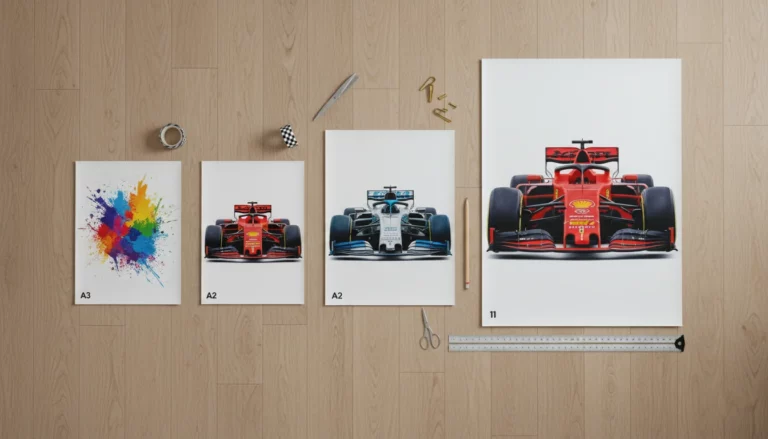
Every poster is printed on premium 250gsm glossy, fade-resistant photo paper with high-resolution digital printing, available in A3, A2, and A1 sizes with free UK delivery.
Browse the full Formula 1 poster collection →
Love motorsport? Explore our full range of sports posters or discover more F1 prints, vintage F1 art, and racing wall art at Poster Print Base.