Lewis Hamilton: A Career in Pictures — Timeline of His Seven Championships
From a council estate in Stevenage to the most decorated driver in Formula 1 history. This is the story of Sir Lewis Hamilton.
Few sporting careers have been as visually rich, emotionally charged, or record-shattering as that of Lewis Hamilton. Across 380 Grand Prix entries, three teams, and nearly two decades at the pinnacle of motorsport, Hamilton has rewritten the record books in ways that once seemed impossible — 105 race wins, 104 pole positions, 202 podium finishes, and seven World Championships that tie him with Michael Schumacher as the most successful driver in the sport’s history.
But Hamilton’s story has never just been about numbers. It’s about a boy from a working-class family in Hertfordshire who smashed through barriers of race, class, and expectation to become the most famous Formula 1 driver on the planet — and one of the most recognisable athletes alive. His motto, tattooed across his shoulders, says it all: Still I Rise.
Here’s the full timeline of his extraordinary career — championship by championship, era by era.
The Early Years: Karting to Formula 1 (1993–2006)
Lewis Carl Davidson Hamilton was born on 7 January 1985 in Stevenage, Hertfordshire. His father Anthony, who had emigrated from Grenada as a child, worked multiple jobs to fund his son’s karting career — remortgaging the family home and taking on extra shifts to keep Lewis on the track. It was a sacrifice that would pay off in ways neither of them could have imagined.
Hamilton dominated karting throughout the late 1990s, winning the British Cadet Championship at the age of ten and the European Championship at fifteen. At a 1995 awards ceremony, a ten-year-old Hamilton famously approached McLaren boss Ron Dennis and said: “I want to race for your team one day.” Dennis wrote in the youngster’s autograph book: “Phone me in nine years, we’ll sort something out.”
True to his word, Dennis signed Hamilton to the McLaren Young Driver Programme in 1998. Over the next eight years, McLaren nurtured Hamilton through the junior formulae — Formula Renault, Formula Three, and GP2. He won the GP2 Series title in 2006 in dominant fashion, earning his place on the F1 grid alongside two-time World Champion Fernando Alonso at McLaren for 2007.
2007: The Rookie Sensation
Hamilton’s debut season was unlike anything F1 had ever witnessed. He scored a podium in his very first Grand Prix in Australia, won his first race in Canada six rounds later, and led the World Championship for much of the season. At just 22 years old, he was going wheel-to-wheel with his vastly experienced teammate Alonso — and matching him blow for blow.
The intra-team rivalry became one of the most intense in F1 history. McLaren imploded under the pressure, and the now-infamous “Spygate” scandal — in which McLaren were found to have possessed confidential Ferrari technical data — cast a shadow over the entire campaign. Hamilton led the standings heading into the final two races but a series of strategic errors and mechanical problems saw him lose the title by a single point to Kimi Räikkönen’s Ferrari.
It was heartbreaking, but it announced Hamilton to the world as a generational talent. He finished the season with four wins, twelve podiums, and the knowledge that a World Championship was within his grasp.
Championship 1: 2008 — The Last-Corner Miracle (McLaren)
If 2007 was the heartbreak, 2008 was the redemption. Hamilton and McLaren returned stronger, locked in a season-long battle with Ferrari’s Felipe Massa and the emerging BMW Sauber of Robert Kubica.
The championship came down to the final race in Brazil — and the final corner of the final lap. Massa crossed the line first and, for approximately thirty seconds, believed he was World Champion. But Hamilton, who had slipped to sixth after being overtaken by Sebastian Vettel’s Tow Rosso, passed Toyota’s Timo Glock on the very last corner of the very last lap to claim fifth place — and with it, the World Championship by a single point.
Hamilton became the youngest World Champion in F1 history at 23 years old (a record later broken by Sebastian Vettel in 2010). He was also the first Black driver to win the title — a milestone whose significance extended far beyond the sport itself.
2008 stats: 5 wins, 10 podiums, 7 pole positions, 98 points.
The Wilderness Years: 2009–2012
The four seasons that followed Hamilton’s first title were characterised by flashes of brilliance against a backdrop of declining machinery. McLaren remained competitive but were increasingly outpaced by Red Bull and Vettel, who won four consecutive championships from 2010 to 2013.
Hamilton continued to deliver stunning individual performances — his victory in the rain at Silverstone in 2008, his masterclass in China 2011, his wheel-to-wheel battles with Vettel and Jenson Button — but the championship was always out of reach. By the end of 2012, frustration had set in. McLaren’s car was fast but unreliable, and Hamilton felt the team’s development was stalling.
In a decision that stunned the paddock, Hamilton announced he would leave McLaren — the team that had nurtured him since childhood — to join Mercedes for 2013. At the time, Mercedes were a midfield team. Many pundits thought he had made the worst decision of his career.
He hadn’t.
Championship 2: 2014 — The Silver Arrows Arrive (Mercedes)
The 2014 season brought F1’s biggest technical revolution in decades: the switch to 1.6-litre turbocharged V6 hybrid power units. Mercedes had been secretly developing their engine for years, and when the lights went out in Melbourne, it was immediately clear they had built something extraordinary. The Mercedes W05 was the fastest car on the grid by a significant margin.
Hamilton and his new teammate Nico Rosberg — a childhood karting rival turned fierce on-track adversary — dominated the season. The battle between them was intense, personal, and occasionally bitter. Collisions at Spa, team orders controversies, and frosty press conferences defined a rivalry that gripped the sport.
Hamilton prevailed, winning 11 of 19 races and clinching his second World Championship at the season finale in Abu Dhabi with a dominant lights-to-flag victory. It was the start of an era of unprecedented dominance.
2014 stats: 11 wins, 16 podiums, 7 pole positions, 384 points.
Championship 3: 2015 — Complete Control
If 2014 had been a fierce fight, 2015 was a procession. Hamilton was in imperious form from the opening round, winning ten of the first twelve races and wrapping up the title with three rounds to spare at the United States Grand Prix in Austin, Texas.
He scored 11 pole positions from the first 12 qualifying sessions and took 17 podium finishes from 19 races — a joint record at the time. Rosberg was competitive but simply couldn’t live with Hamilton’s relentless consistency. The Mercedes W06 was again the class of the field, and Hamilton exploited every ounce of its potential.
His third title drew him level with his hero Ayrton Senna — and the emotional parallels were not lost on Hamilton, who had idolised the Brazilian since childhood. Senna’s McLaren-Honda era had inspired an entire generation of drivers, and Hamilton was proud to stand alongside his hero in the record books.
2015 stats: 10 wins, 17 podiums, 11 pole positions, 381 points.
2016: The One That Got Away
The 2016 season was the most painful of Hamilton’s career to that point. Despite winning ten races — more than any other driver — he lost the championship to Rosberg by five points after a series of mechanical failures, including engine blow-ups in Malaysia and a poor start in Japan.
Hamilton led the standings for much of the year but a run of misfortune at critical moments swung the momentum to Rosberg, who drove the most consistent season of his career. The title was decided at the Abu Dhabi finale, where Hamilton deliberately backed Rosberg into traffic in a last-ditch attempt to engineer the result he needed. It wasn’t enough. Rosberg finished second and became World Champion.
Rosberg then stunned the world by announcing his immediate retirement from racing just five days later — leaving Hamilton without the rival who had pushed him harder than anyone since Alonso.
Championship 4: 2017 — The Vettel Duel Begins
With Rosberg gone, Mercedes paired Hamilton with Valtteri Bottas. But the real battle was now with Ferrari and Sebastian Vettel, who emerged as a genuine title contender following a major aerodynamic regulation overhaul.
Vettel led the championship after the summer break following victories in Australia, Bahrain, Monaco, and Hungary. But Hamilton produced one of the finest runs of his career from September onwards, winning five of six races — including a pivotal victory at the Italian Grand Prix where he broke the all-time record for pole positions, surpassing Michael Schumacher’s tally of 68.
Vettel’s challenge crumbled amid mechanical failures and uncharacteristic errors, most notably a collision with Max Verstappen and Räikkönen at the start in Singapore. Hamilton clinched his fourth title in Mexico, drawing level with Alain Prost and Vettel.
2017 stats: 9 wins, 13 podiums, 11 pole positions, 363 points.
Championship 5: 2018 — Matching Fangio
The Hamilton-Vettel rivalry reached its peak in 2018. The two traded victories throughout the first half of the season, with Vettel holding a 17-point lead heading into the German Grand Prix. Then came one of the most dramatic turning points in championship history: Vettel crashed out of the lead at his home race in Hockenheim while Hamilton, who had started 14th on the grid, charged through the field to win.
From that moment, the tide turned decisively. Hamilton won six of the next eight races, including stunning drives at Monza, Singapore, and Suzuka. He clinched his fifth World Championship at the Mexican Grand Prix, matching the legendary Juan Manuel Fangio’s tally that had stood for over 60 years.
Hamilton finished the year with a then-record 408 points — a mark of just how dominant he had been during the second half of the campaign.
2018 stats: 11 wins, 17 podiums, 11 pole positions, 408 points.
Championship 6: 2019 — Closing in on Schumacher
By 2019, Hamilton’s dominance was so complete that the question was no longer whether he would win — but how many records he could break before he was done. Mercedes delivered another devastatingly fast car, and Hamilton made the most of it.
He led the championship from start to finish, fending off a spirited challenge from teammate Bottas and remaining unchallenged despite Ferrari’s mid-season surge. Hamilton wrapped up his sixth title at the United States Grand Prix with two races to spare, then ended the season with 11 wins and a new all-time points record of 413 — breaking his own benchmark from the year before.
Six titles. Only one man had ever won more: Michael Schumacher, with seven. The record that had once seemed untouchable was now within reach.
2019 stats: 11 wins, 17 podiums, 5 pole positions, 413 points.
Championship 7: 2020 — Equalling the Record
The 2020 season was disrupted by the COVID-19 pandemic, with the first race not taking place until July. When it did, Hamilton and Mercedes were utterly dominant. The all-black Mercedes W11 — repainted from silver in solidarity with the Black Lives Matter movement — was the fastest F1 car ever built, and Hamilton drove it with a precision and consistency that bordered on perfection.
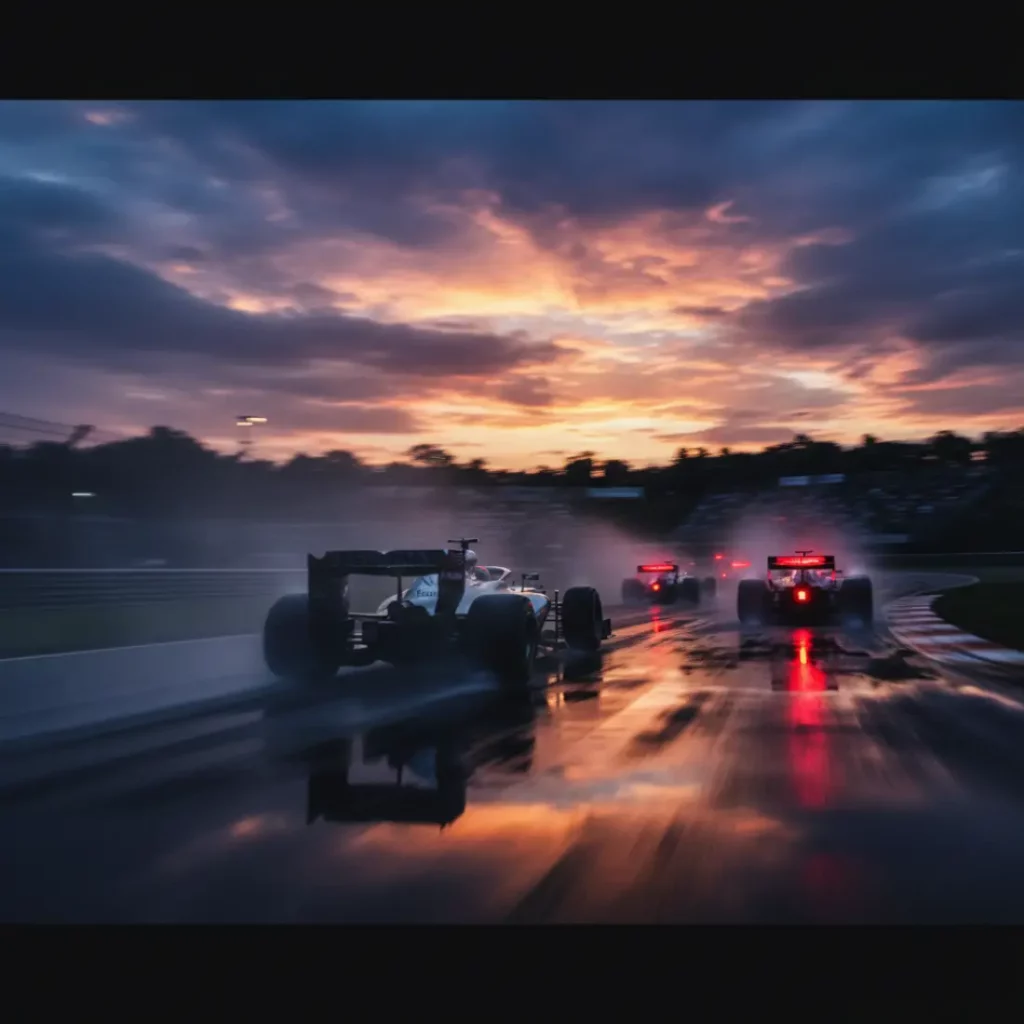
He won 11 of 17 races, equalling his personal best but achieving it in fewer races than ever before. At the Portuguese Grand Prix, he took his 92nd career victory, surpassing Schumacher’s all-time record for race wins. Then, at a rain-soaked Istanbul Park, Hamilton delivered one of the greatest drives of his career — threading a Mercedes with virtually no grip through treacherous conditions to win from sixth on the grid and clinch his seventh World Championship.
Seven titles. Level with Schumacher. The most successful F1 driver of all time — by any statistical measure.
2020 stats: 11 wins, 14 podiums, 10 pole positions, 347 points.
2021: The Controversy
The 2021 season produced one of the most gripping — and controversial — title fights in F1 history. Hamilton and Max Verstappen went wheel-to-wheel from the opening round, trading victories, collisions, and accusations throughout a season that swung wildly from one contender to the other.
Hamilton won eight races and broke the 100-win milestone at the Russian Grand Prix. Verstappen matched him blow for blow with Red Bull Racing. They arrived at the Abu Dhabi finale level on points — the first time that had happened since 1974.
What followed remains the most disputed moment in modern F1 history. A late safety car, a controversial decision by race director Michael Masi to allow only select lapped cars to un-lap themselves, and a final-lap overtake by Verstappen on fresher tyres robbed Hamilton of what had seemed a certain eighth title. The aftermath led to Masi’s removal and a wholesale restructuring of the FIA’s race management procedures.
Hamilton was dignified in defeat. He attended the FIA prize-giving ceremony, congratulated Verstappen, and returned for 2022 with his characteristic resolve. But the pain of Abu Dhabi 2021 has never fully faded.
2022–2024: The Ground-Effect Struggle and Final Mercedes Chapter
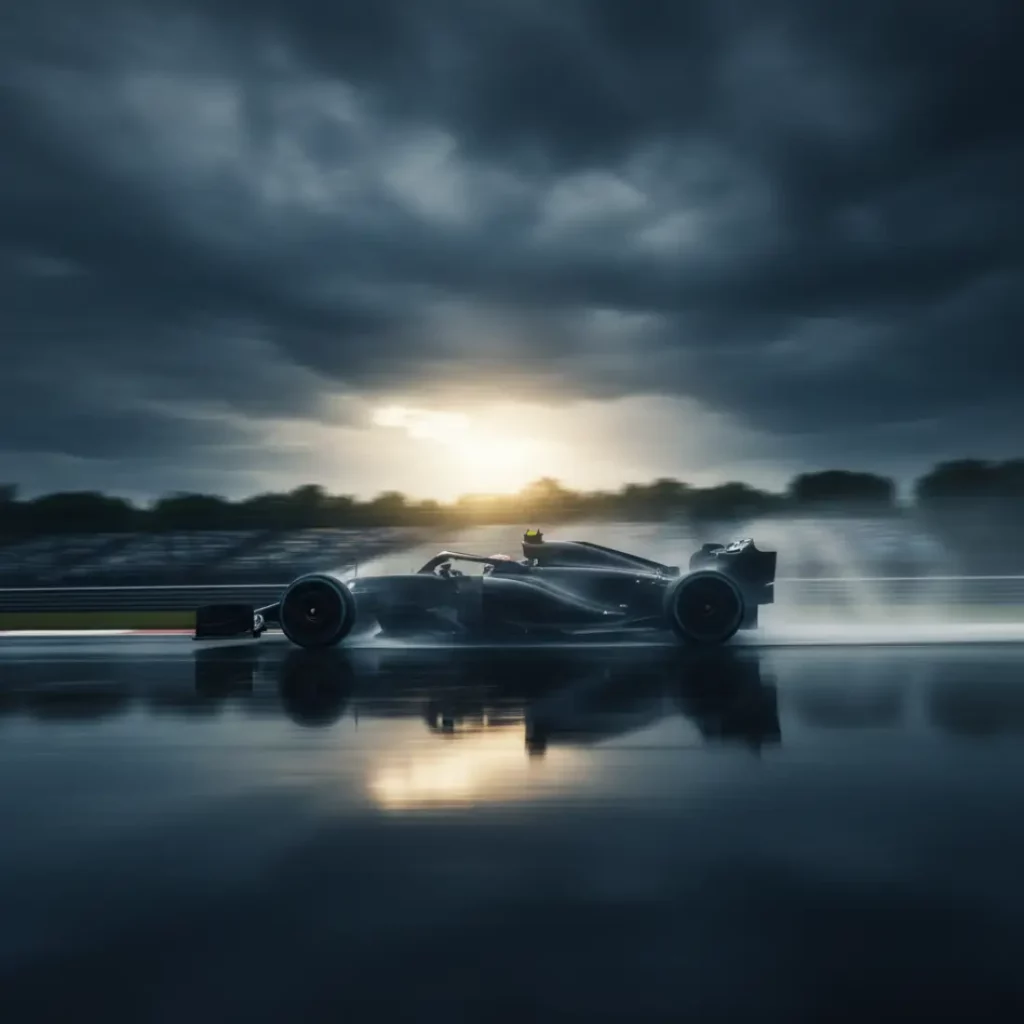
The 2022 regulation changes brought the return of ground-effect aerodynamics — and a significant reset of the competitive order. Mercedes, who had dominated for eight consecutive years, found themselves behind Red Bull and, at times, Ferrari. Hamilton endured his first winless season since joining F1, finishing sixth in the standings while Charles Leclerc and Verstappen battled for the title.
2023 brought improvement but not a return to the front. Hamilton secured multiple podiums and finished third in the championship behind a dominant Verstappen, demonstrating that his speed remained intact even if the car couldn’t match Red Bull’s pace.
Then came 2024 — and perhaps the most emotional weekend of Hamilton’s career. At the British Grand Prix, with Mercedes finally competitive after mid-season upgrades, Hamilton won at Silverstone for a record-extending ninth time. It was his first victory since the 2021 Saudi Arabian Grand Prix — 945 days without a win — and the outpouring of emotion on the radio and podium moved fans around the world. He followed it up with a stunning victory at Spa-Francorchamps, taking his career tally to 105 wins.
But the biggest announcement had already been made. In February 2024, Hamilton confirmed he would leave Mercedes at the end of the season to join Scuderia Ferrari for 2025 — fulfilling a lifelong dream of driving for the most iconic team in F1 history.
2025: The Ferrari Chapter Begins
Hamilton’s move to Ferrari was the biggest transfer in F1 since Schumacher joined the Scuderia in 1996. The expectation was enormous. A seven-time champion in red — the possibilities seemed endless.
The reality of the first season proved far more challenging. Ferrari’s SF-25 was not the car either driver or team had hoped for, and Hamilton found himself in a year-long battle to adapt to unfamiliar machinery, a new team culture, and a completely different way of working. He scored a sprint victory in Shanghai early in the campaign — a flash of the old Hamilton magic — but struggled for consistency throughout the year, particularly in qualifying.
Hamilton finished sixth in the standings with 156 points, 86 behind teammate Charles Leclerc. For the first time in his illustrious career, he went an entire season without a Grand Prix podium — the first Ferrari driver in over four decades to do so. He described 2025 candidly as the toughest season of his career.
But there were still moments of brilliance buried beneath the struggles. Recovery drives from the back of the grid — twelfth to fourth at Imola, nineteenth to eighth in Las Vegas — showed the racecraft that has defined his career remains sharp. And crucially, Ferrari had switched development focus to the 2026 regulations early in the season, meaning the SF-25 was largely abandoned mid-year.
With 2026 bringing a complete regulatory reset — active aerodynamics, new power units, and a car that Hamilton has been directly involved in developing — the stage is set for what could be the most remarkable final chapter in F1 history. At 41 years of age, Hamilton enters the new era with fresh hope, a new car built with his input, and the burning desire to stand alone with a record eighth World Championship.
Hamilton by the Numbers
Across 380 Grand Prix entries spanning McLaren, Mercedes, and Ferrari, Hamilton’s career statistics are staggering: 105 race victories (the all-time record), 104 pole positions (the all-time record), 202 podium finishes (the all-time record), and 5,018.5 career points. He has won at least one race in 15 of his 17 full seasons in F1, scored points in every season he has competed in, and has won races at more individual circuits than any other driver in the sport’s history.
Beyond the statistics, Hamilton’s influence on Formula 1 extends far further than the track. He has been a tireless advocate for diversity and inclusion in motorsport, founding the Hamilton Commission to investigate barriers to diversity in the sport and launching Mission 44, a charitable foundation aimed at supporting young people from underrepresented backgrounds. He was knighted by the Prince of Wales in December 2021 — becoming Sir Lewis Hamilton — and has used his platform to champion causes ranging from environmental sustainability to anti-racism.
He is, by any measure, the most complete F1 legend the sport has ever produced.
| Year | Team | Wins | Poles | Podiums | Points | Margin | Defining Moment |
|---|---|---|---|---|---|---|---|
|
1
2008
|
McLaren | 5 | 7 | 10 | 98 | +1 pt | Last-corner pass at Interlagos to win the title by a single point from Massa |
|
2
2014
|
Mercedes | 11 | 7 | 16 | 384 | +67 pts | Dominated the new hybrid era in fierce duel with teammate Nico Rosberg |
|
3
2015
|
Mercedes | 10 | 11 | 17 | 381 | +59 pts | Title sealed with 3 races to spare in Austin. Equalled Senna’s 3 championships |
|
4
2017
|
Mercedes | 9 | 11 | 13 | 363 | +46 pts | Broke Schumacher’s all-time pole record at Monza. Won 5 of final 6 races |
|
5
2018
|
Mercedes | 11 | 11 | 17 | 408 | +88 pts | Won from P14 in Germany as Vettel crashed. Matched Fangio’s 5 titles |
|
6
2019
|
Mercedes | 11 | 5 | 17 | 413 | +87 pts | All-time points record (413). Clinched in Austin with 2 races to spare |
|
7
2020
|
Mercedes | 11 | 10 | 14 | 347 | +124 pts | Broke Schumacher’s 91-win record. Equalled 7 titles with Istanbul masterclass |
| CAREER | 380 GPs | 105 | 104 | 202 | 5,018.5 | 7 titles | All records. McLaren → Mercedes → Ferrari |
Celebrate Hamilton’s Legacy on Your Wall
Lewis Hamilton’s career is one of the most visually iconic in all of sport. From the silver of McLaren and Mercedes to the red of Ferrari, every chapter has its own unforgettable imagery — the yellow helmet, the number 44, the raised fist, the tears on the podium.
At Poster Print Base, our Lewis Hamilton poster celebrates the seven-time World Champion in stunning detail — perfect for any bedroom, office, or fan cave. Pair it with prints of the rivals and legends who defined his era: Ayrton Senna, Max Verstappen, Sebastian Vettel, Fernando Alonso, Charles Leclerc, and Lando Norris.
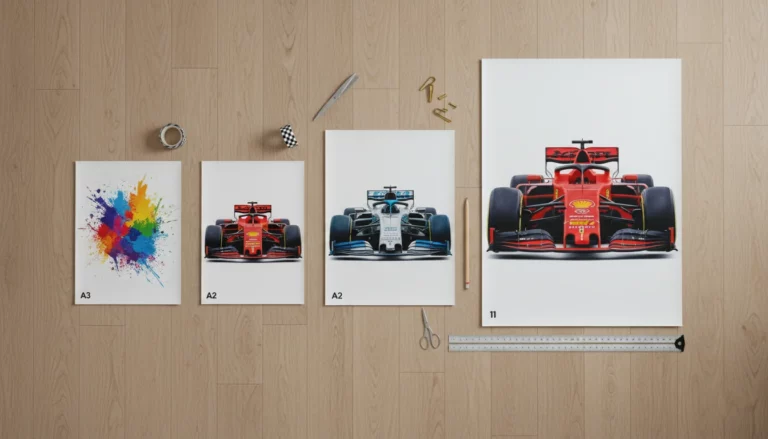
Every poster is printed on premium 250gsm glossy, fade-resistant photo paper with high-resolution digital printing, available in A3, A2, and A1 sizes with free UK delivery.
Shop the Lewis Hamilton Poster →
Browse the full Formula 1 poster collection →
Love motorsport? Explore our full range of sports posters or discover more F1 prints, racing art, and vintage F1 posters at Poster Print Base.