F1 Team Colours: The Stories Behind the Iconic Looks
From rosso corsa to papaya orange, Silver Arrows to British racing green — every Formula 1 team colour has a story. Here’s how the grid got its rainbow.
Colour is the first thing you notice. Before you read a name on the car, before you spot a number, before you identify a helmet design — you see the colour. A flash of red and you know it’s Ferrari. A blur of papaya and it’s McLaren. A streak of silver and it’s Mercedes.
In Formula 1, colour isn’t just decoration. It’s identity, history, and storytelling compressed into a single visual hit at 300km/h. The colours that define the grid today have roots stretching back over a century — to a time when national pride, practical necessity, and sometimes pure accident determined what shade a car would wear.
Here’s the story behind every iconic F1 team colour on the 2026 grid.
Ferrari Red — Rosso Corsa
No colour in motorsport is more iconic than Ferrari red. It’s the colour that every child draws when they picture a racing car. It’s the colour that makes the tifosi weep when it crosses the finish line first. It’s not just a livery — it’s a national symbol.
The story begins not with Ferrari but with international racing regulations. In the early 1900s, the governing bodies of motorsport assigned national racing colours to each country: blue for France, green for Britain, white (later silver) for Germany, and red for Italy. Every Italian racing car — Alfa Romeo, Maserati, Lancia, and eventually Ferrari — was painted in rosso corsa, literally “racing red.”
When Enzo Ferrari watched his first race at the Circuito di Bologna in 1908, the red Fiats on the track planted a seed that would define his life’s work. By the time his Scuderia entered Formula 1 in 1950, the colour was non-negotiable. Both the 125 S road car and the 125 F1 single-seater were painted in a deep burgundy red — the official colour of Italian racing since the 1920s.
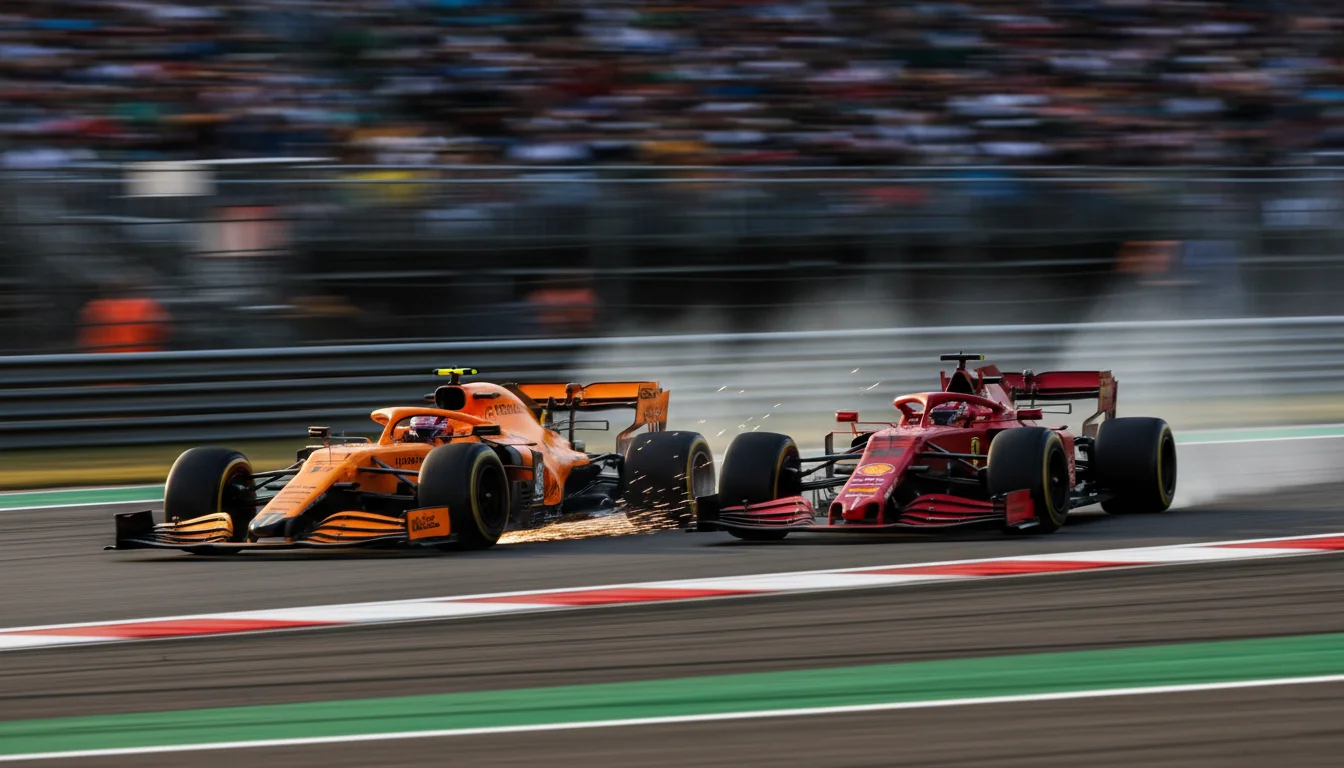
What makes Ferrari unique is that they never abandoned it. When sponsorship arrived in F1 in the late 1960s, every other team sold their bodywork to the highest bidder. Lotus went from British racing green to the gold and black of John Player Special. McLaren went from papaya to Marlboro red and white. But Ferrari kept the red. They adjusted the shade — brightening it for television in the late 1990s under Marlboro’s influence, then returning to a deeper rosso corsa for the 2020 Tuscan Grand Prix to celebrate their 1,000th race — but the core identity never wavered.
Today, with Charles Leclerc and Lewis Hamilton driving for the Scuderia in 2026, Ferrari red remains the most recognisable colour in world sport. In the early 1990s, 85% of all Ferraris sold were red. Even now, it accounts for over 40% of orders. Enzo Ferrari once said that any child asked to draw a car would draw a red one. He wasn’t wrong.
McLaren Papaya — The Colour That Demanded Attention
McLaren’s papaya orange is the comeback story of F1 colour design. It vanished for over four decades, then returned to become one of the most beloved liveries on the grid — and it all started because Bruce McLaren wanted his car to show up on black-and-white television.
In the mid-1960s, McLaren’s fledgling team experimented with several colour schemes. They tried white with a green stripe for the 1966 Monaco Grand Prix (doubling as a prop for the film Grand Prix). They tried red in 1967 — until organisers at Monza pointed out it was a bit too similar to Ferrari. Nothing stuck.
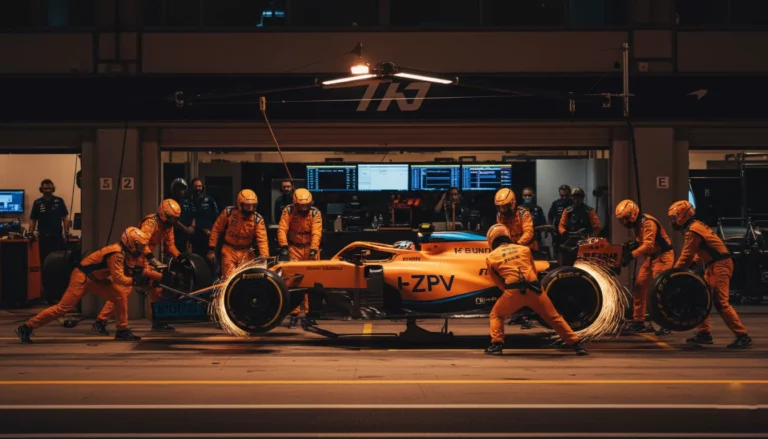
Then Bruce’s business partner Teddy Mayer spotted a brightly coloured sports car at a British race meeting and had an idea. Papaya orange would stand out on the grainy black-and-white television screens of the era, and it would “loom large in the mirrors of rivals.” The colour was first tested on McLaren’s Can-Am cars in 1967 before making its F1 debut at the 1968 Race of Champions — a race Bruce McLaren won.
The papaya era was short-lived in its original run. Sponsorship deals with Yardley (1972) and then Marlboro (1974) pushed the team towards white and red, a livery that would become iconic in its own right through the Prost-Senna years. McLaren then moved to silver and black in 1997, a look that carried them through the Häkkinen and Hamilton eras.
But in 2017, under CEO Zak Brown, McLaren returned to their roots. The papaya came back — and so did the winning. By 2024, Lando Norris and Oscar Piastri were battling for championships in cars drenched in the very shade Bruce McLaren chose nearly 60 years earlier. In 2025, Norris won the world championship in papaya. You couldn’t script it better.
Mercedes Silver — The Silver Arrows Legend
Mercedes’ silver livery carries one of motorsport’s most romanticised origin stories — and like all the best legends, the truth is slightly more complicated than the myth.
The commonly told version goes like this: at the 1934 Eifelrennen race at the Nürburgring, the Mercedes-Benz W25 was found to be one kilogram over the maximum weight limit. In a stroke of genius, the team’s mechanics scraped off the white paint overnight, revealing the bare aluminium body beneath. The car won, and the Silver Arrows were born.
The reality is that Mercedes and Auto Union cars had been appearing in unpainted aluminium before that race, but the Nürburgring story captured the imagination — and the “Silver Arrows” name stuck forever. When Mercedes entered Formula 1 in the 1950s with Juan Manuel Fangio, their cars gleamed in silver. When they returned to the sport as a full works team in 2010, silver was the only possible choice.
The Mercedes silver era (2014–2021) is arguably the most dominant in F1 history. Hamilton and Nico Rosberg, then Hamilton and Valtteri Bottas, won eight consecutive Constructors’ Championships in silver cars. The colour became synonymous with engineering precision and relentless superiority.
For 2026, with George Russell and Kimi Antonelli driving, Mercedes retain their silver identity — a colour that connects them to Fangio, Moss, and ninety years of racing heritage.
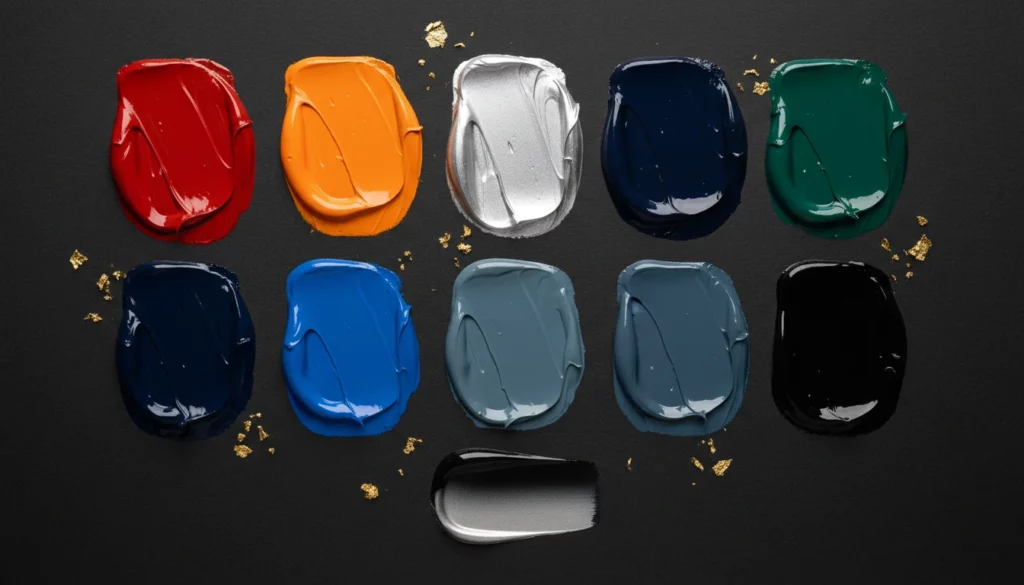
🎨 The Colours of Formula 1
The origin story behind every team colour on the 2026 grid
| Colour | Team | Origin Story | Type | Since |
|---|---|---|---|---|
| FerrariRosso Corsa | Italy’s national racing colour, assigned in the 1900s. Ferrari is the only team to have never abandoned it. | National colour | 1950 | |
| McLarenPapaya Orange | Chosen by Bruce McLaren to stand out on 1960s black-and-white television. Returned in 2018 after 40+ years. | Founder’s choice | 1968 | |
| MercedesSilver Arrows | Legend says paint was scraped off to save weight in 1934, revealing bare aluminium. German national racing colour. | National colour | 1934 | |
| Red BullDark Navy | Corporate brand colour adopted when Red Bull purchased the Jaguar team in 2004. Now synonymous with Verstappen. | Brand identity | 2005 | |
| Aston MartinBritish Racing Green | Britain’s national racing colour since the 1900s. Revived by Aston Martin when the team was rebranded in 2021. | National colour | 2021 | |
| WilliamsWilliams Blue | Deep blue adopted through the Rothmans era (1990s) and retained as the team’s core identity through sponsor changes. | Sponsor legacy | 1994 | |
| AlpineBleu de France | France’s national racing colour. Carried by Alpine road cars since the 1960s and adopted for the F1 rebrand in 2021. | National colour | 2021 | |
| HaasSilver / Grey | American team’s colours have shifted through sponsor partnerships; grey-silver base provides a neutral canvas. | Brand identity | 2016 | |
| Racing BullsSteel Blue | Red Bull’s sister team; darker blue-grey distinguishes them from the main team while retaining family identity. | Brand identity | 2024 | |
| AudiBlack / Silver | German manufacturer’s corporate colours, echoing their dominant Le Mans endurance racing liveries of the 2000s. | Brand identity | 2026 | |
| CadillacTBC | F1’s newest team. American racing heritage meets luxury automotive brand — colour scheme TBC for debut season. | Brand identity | 2026 |
5 of 11 teams draw their colours from the national racing colour system established in the early 1900s — a tradition over 120 years old that still defines the visual identity of Formula 1 today.
Red Bull Navy — From Energy Drink to Empire
Red Bull’s dark navy blue livery is the youngest colour identity among the top teams, but it’s become one of the most recognisable on the grid thanks to the sheer volume of winning it’s done.
When Red Bull purchased the Jaguar Racing team in 2004, they needed a livery that matched their brand without looking like a billboard. The solution was elegant: deep navy blue as the primary colour, with the brand’s signature red and yellow bull motifs integrated into a dynamic, swooping design.
The navy blue anchored the car while the bold graphic accents gave it energy and attitude — perfectly reflecting the brand’s image. As the team’s on-track performance improved, the livery became increasingly iconic. By the time Sebastian Vettel was winning four consecutive championships (2010–2013), Red Bull navy was as established as any colour on the grid.
Under Max Verstappen‘s four-title run (2021–2024), the dark blue car became the one everyone was chasing. In 2026, with Red Bull running their own power unit for the first time and Isack Hadjar alongside Verstappen, the navy blue remains — now representing not just an energy drink’s racing team, but a genuine automotive powerhouse.
Aston Martin Green — British Racing Green Reborn
British racing green is the oldest surviving national racing colour in Formula 1, and Aston Martin’s adoption of it connects the modern grid directly to the sport’s earliest days.
Like rosso corsa for Italy, green was assigned to Britain in the early 1900s as the nation’s official racing colour. The great British teams of the 1950s and 1960s — Vanwall, BRM, Cooper, Lotus — all raced in various shades of green. Jim Clark’s Lotus was green. Sir Jackie Stewart‘s Matra was green. Nigel Mansell tested in green.
When the team now known as Aston Martin was rebranded from Racing Point for 2021, the dark “Aston Martin green” livery was a statement of intent — this wasn’t just another midfield team; this was a British institution reclaiming its heritage. The specific shade, a deep metallic green with hints of teal, was chosen to evoke both the classic British racing tradition and Aston Martin’s own road car identity.
For 2026, with legendary designer Adrian Newey now leading the technical team and Fernando Alonso at the wheel alongside Lance Stroll, the green Aston Martin is one of the most anticipated cars on the grid. New Honda power and Newey’s genius could turn that heritage colour into a championship contender.
Williams Blue — The Understated Champion
Williams’ blue and white livery has been one of the most enduring colour combinations in F1, even as the team’s fortunes have fluctuated dramatically over the decades.
The deep blue that Williams is known for first appeared in earnest during the team’s partnership with Rothmans in the mid-1990s — the era when the FW14B, FW15C, and FW16 were among the most dominant cars ever built. Nigel Mansell, Alain Prost, Damon Hill, and Jacques Villeneuve all won championships in blue and white Williams cars.
Even when sponsors changed, Williams retained blue as their core identity — from the BMW era through to the Martini years and beyond. The shade evolved, but the association stuck. Today, with Carlos Sainz and Alex Albon driving for 2026, Williams’ blue represents both a proud past and an ambitious future, as the team aims to return to competitiveness under the new regulations.
Alpine Blue — Bleu de France
Alpine’s blue livery connects to the French national racing colour, bleu de France, in the same way Ferrari’s red connects to Italy. French racing cars have been blue since the early 1900s — from the Bugattis and Delahayes of the pre-war era to the Matras of the 1960s and the Ligiers of the 1980s.
When Renault rebranded their team as Alpine for 2021, the blue was non-negotiable. Alpine is a French sports car brand with a racing heritage built on blue — the original Alpine A110 of the 1960s was iconic in its French blue livery. The F1 team’s shade has evolved through various partnerships, but the core blue identity has remained consistent.
For 2026, Alpine has switched to Mercedes power in a major strategic shift, but the blue stays. Pierre Gasly and Franco Colapinto will carry the tricolore-inspired livery into the new era.
The National Racing Colours — Where It All Began
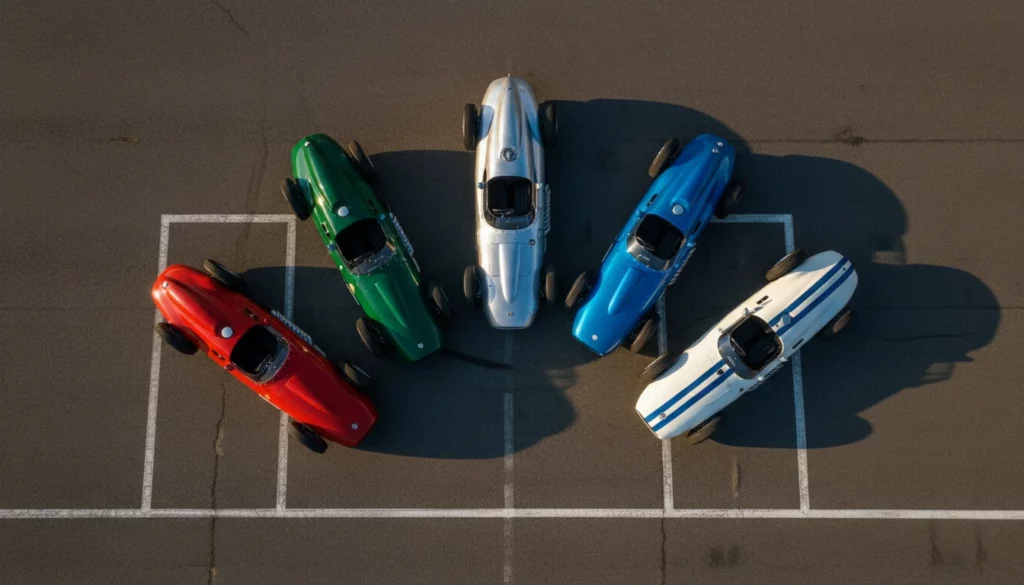
Understanding F1 team colours requires understanding the system that preceded them. Before sponsorship arrived in 1968, every car’s colour was determined by the nationality of the team entering it:
Red — Italy (Ferrari, Alfa Romeo, Maserati). Green — Great Britain (Vanwall, BRM, Cooper, Lotus). Silver/white — Germany (Mercedes, Auto Union, Porsche). Blue — France (Bugatti, Matra, Ligier). Yellow — Belgium. Orange — The Netherlands. White with blue stripes — United States.
This system was elegant in its simplicity. You could identify every car’s nationality from the grandstands without reading a single word. When Lotus founder Colin Chapman persuaded the FIA to allow sponsorship liveries in 1968, painting his car in the gold and red of Imperial Tobacco’s Gold Leaf brand, the national colour system effectively ended — but its legacy lives on in the teams that chose to honour tradition.
Ferrari kept Italian red. Aston Martin revived British green. Alpine adopted French blue. Mercedes reclaimed German silver. Even McLaren’s papaya orange has been retroactively linked to New Zealand’s unofficial racing colour — the orange that Kiwi teams traditionally used.
The New Arrivals — Audi and Cadillac
The 2026 grid brings two brand-new colour identities.
Audi enters F1 with a black and silver livery that reflects the German manufacturer’s corporate identity and their motorsport heritage — the Audi R8 Le Mans cars that dominated endurance racing in the 2000s often featured silver and black schemes. Nico Hülkenberg and Gabriel Bortoleto drive.
Cadillac, F1’s first entirely new team since Haas in 2016, debuts with a colour scheme that nods to American racing heritage. With Sergio Pérez and Valtteri Bottas at the wheel, the American team adds another dimension to the grid’s visual identity.
Why Colour Matters — The Psychology of F1 Liveries
There’s a reason Ferrari red gets your heart racing while Mercedes silver feels clinical and precise. Colour psychology plays a genuine role in how fans connect with teams.
Red is the colour of passion, danger, and aggression — perfectly matched to Ferrari’s emotional, all-or-nothing racing philosophy. Orange conveys energy, creativity, and warmth — fitting for McLaren’s fan-first culture under Zak Brown. Navy blue suggests authority, reliability, and depth — ideal for Red Bull’s meticulous, data-driven approach. Green evokes heritage, nature, and resilience — a natural fit for a British brand with over a century of history like Aston Martin.
These associations aren’t accidental. Modern F1 teams employ branding experts who understand that colour is often the single most powerful element of their visual identity. A fan walking through an airport wearing a papaya cap is instantly identifiable as a McLaren supporter. A phone case in Ferrari red needs no logo to communicate its allegiance.
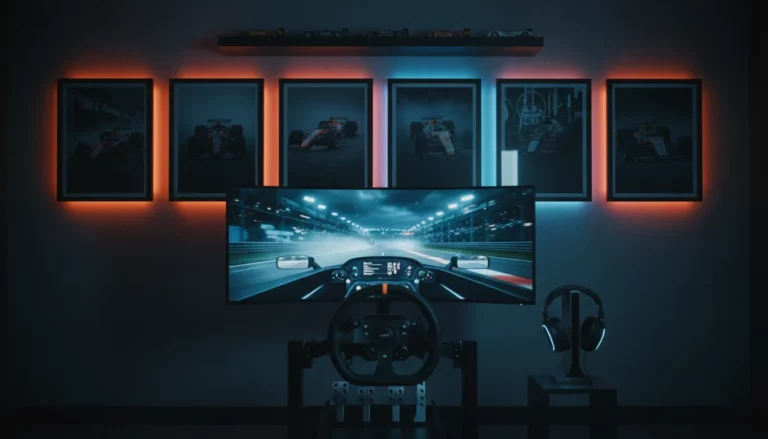
For poster collectors and fan room builders, colour is equally important. A Ferrari red poster next to a McLaren papaya print creates a visual tension that mirrors the on-track rivalry. A wall of Red Bull navy, offset by the green of Aston Martin, tells the story of the sport’s competitive landscape through colour alone.
Colour Your Collection
The colours of Formula 1 are more than livery choices — they’re chapters in the sport’s story. Every shade carries decades of history, triumph, tragedy, and identity. When you hang an F1 poster on your wall, you’re not just displaying a driver or a car — you’re displaying the colour that millions of fans around the world associate with the greatest moments in racing history.
Browse the full Formula 1 poster collection at Poster Print Base — from Ferrari red Leclerc prints to papaya orange Norris artwork, Red Bull navy Verstappen posters to legendary Senna and Lauda tributes. Printed on premium 250gsm paper, available in A3, A2, and A1 sizes, with free UK delivery on every order.
Explore more F1 content: The 10 Most Iconic F1 Liveries of All Time | How to Create the Ultimate F1 Fan Room | A Beginner’s Guide to Formula 1 | The Evolution of F1 Car Design