A Beginner’s Guide to Formula 1: Everything You Need to Know
New to the world’s fastest sport? Here’s everything you need to understand Formula 1 — from how a race weekend works to who the key drivers are and why millions of fans around the world are obsessed.
Formula 1 is experiencing a golden age. Thanks to Netflix’s Drive to Survive, a new generation of fans has discovered the drama, speed, technology, and human stories that make F1 the most-watched motorsport on the planet. But if you’re just getting into it, the sport can feel overwhelming — grid penalties, tyre strategies, DRS zones, and a paddock full of unfamiliar names.
Don’t worry. This guide breaks down everything a new fan needs to know, from the absolute basics to the details that will make you sound like you’ve been watching for years. Welcome to the grid.
What Is Formula 1?
Formula 1 is the highest class of single-seater motor racing in the world. The “formula” refers to the set of technical rules that all cars must follow — everything from engine specifications to aerodynamic dimensions. The “1” means it’s the pinnacle; there’s nothing faster.
Twenty-two drivers representing 11 teams compete across 24 race weekends (called Grands Prix) held on circuits around the globe — from the streets of Monaco to purpose-built tracks in the deserts of Bahrain and Saudi Arabia. The season runs from March to December, visiting five continents along the way.
Two championships run simultaneously: the World Drivers’ Championship (which crowns the best individual driver) and the World Constructors’ Championship (which crowns the best team). Points are awarded at every race, and the driver and team with the most points at the end of the season win the titles.
The current World Champion is Lando Norris, who won his first title with McLaren in 2025 after a season-long battle with Max Verstappen and Oscar Piastri. McLaren are also the reigning Constructors’ Champions.
How Does a Race Weekend Work?
A typical Grand Prix weekend spans three days:
Friday — Practice. Two one-hour practice sessions (FP1 and FP2) give teams time to test setups, evaluate tyre performance, and gather data. This is where engineers and drivers fine-tune the car for the specific characteristics of each circuit.
Saturday — Qualifying. This is where the starting order for Sunday’s race is decided. Qualifying is split into three knockout rounds: Q1 eliminates the slowest five cars, Q2 eliminates the next five, and Q3 sees the remaining ten drivers fight for pole position — the right to start at the very front of the grid. Qualifying often produces the most dramatic moments of the weekend, as drivers push their cars to the absolute limit for a single flying lap.
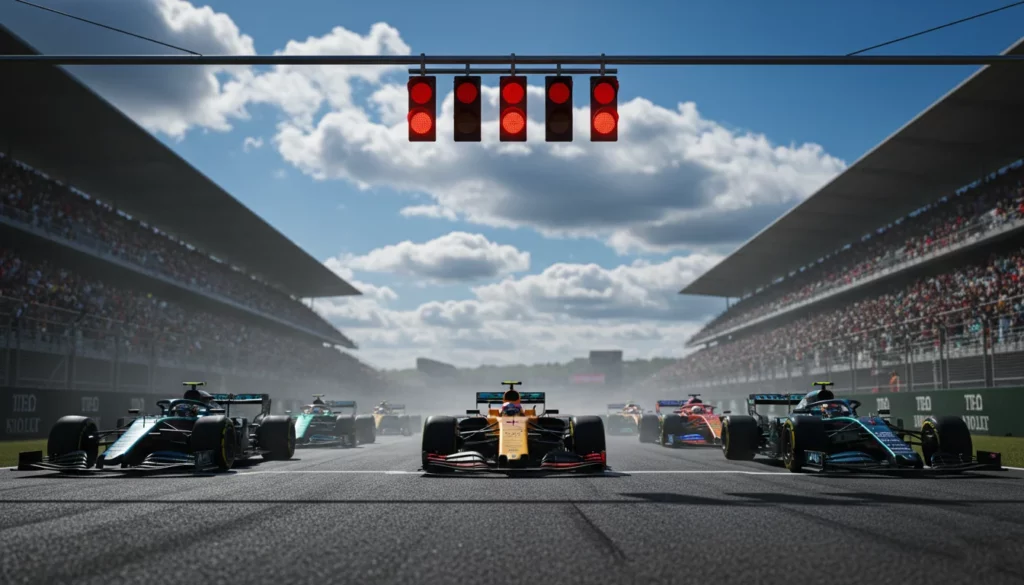
Sunday — The Race. The main event. Races are typically around 300km (roughly 50–70 laps depending on the circuit) and last about 90 minutes to two hours. The lights go out, and it’s a flat-out sprint to the chequered flag.
Some weekends also feature Sprint races — shorter races on Saturday that award additional points. These add an extra layer of competition and give fans more on-track action.
🏁 The 2026 F1 Grid at a Glance
All 11 teams, 22 drivers & 6 engine manufacturers — your quick reference guide
| Team | Drivers | Engine | Status |
|---|---|---|---|
McLaren |
Lando Norris 🏆Oscar Piastri |
Mercedes | Champions |
Ferrari |
Charles LeclercLewis Hamilton |
Ferrari | Title contender |
Red Bull |
Max VerstappenIsack Hadjar |
Red Bull Ford 🆕 | Title contender |
Mercedes |
George RussellKimi Antonelli |
Mercedes | Title contender |
Aston Martin |
Fernando AlonsoLance Stroll |
Honda 🆕 | Dark horse |
Williams |
Carlos SainzAlex Albon |
Mercedes | Midfield |
Alpine |
Pierre GaslyFranco Colapinto |
Mercedes 🆕 | Midfield |
Haas |
Esteban OconOliver Bearman |
Ferrari | Midfield |
Racing Bulls |
Liam LawsonArvid Lindblad Rookie |
Red Bull Ford 🆕 | Midfield |
Audi |
Nico HülkenbergGabriel Bortoleto |
Audi 🆕 | New manufacturer |
Cadillac |
Sergio PérezValtteri Bottas |
Ferrari | New team |
How Do Points Work?
Points are awarded to the top ten finishers in each Grand Prix:
1st place: 25 points, 2nd: 18, 3rd: 15, 4th: 12, 5th: 10, 6th: 8, 7th: 6, 8th: 4, 9th: 2, 10th: 1.
Sprint races award points on a smaller scale to the top eight finishers.
These points accumulate across the entire season. Consistency matters as much as outright victory — a driver who finishes second at every race will outscore one who wins half but retires from the rest.
The Cars — Engineering Marvels
Formula 1 cars are the fastest circuit-racing machines on earth. Here’s what makes them special:
Speed. F1 cars can exceed 370km/h (230mph) on the fastest straights. They accelerate from 0–100km/h in approximately 2.6 seconds and generate braking forces of over 5G — meaning the driver’s body weight effectively multiplies fivefold under heavy braking.
Power unit. Each car is powered by a 1.6-litre V6 turbo-hybrid engine producing over 1,000 horsepower. For 2026, the power split is roughly 50/50 between the internal combustion engine and electrical energy — a near-300% increase in electrical power compared to the previous generation. Six manufacturers supply engines: Ferrari, Mercedes, Honda, Renault, Audi (new for 2026), and Red Bull Ford Powertrains (also new for 2026).
Aerodynamics. The complex wings, floors, and bodywork generate enormous downforce — the invisible force that pushes the car into the track surface, allowing it to corner at extraordinary speeds. For 2026, F1 has introduced active aerodynamics for the first time: both the front and rear wings dynamically adjust angle depending on whether the car is cornering (maximum downforce) or on a straight (minimum drag for top speed). This replaces the old DRS system.
Tyres. Pirelli supplies all the tyres. Multiple compounds are available at each race — softer tyres offer more grip but wear out faster; harder tyres last longer but are slower. Teams must use at least two different compounds during a race, which creates the strategic element of when to pit.
Weight. The 2026 cars weigh a minimum of 768kg — 30kg lighter than the previous generation. They’re also shorter and narrower, designed to be more nimble and agile.
The Teams for 2026
Eleven teams compete in 2026 — the most in F1 since 2016. Each team fields two cars. Here’s who’s who:
McLaren-Mercedes — The reigning champions. Lando Norris and Oscar Piastri form one of the strongest driver pairings on the grid.
Ferrari — The most iconic team in F1 history, with more wins and championships than anyone. Charles Leclerc is joined by seven-time world champion Lewis Hamilton, who moved from Mercedes for 2025.
Red Bull Racing — Home of four-time champion Max Verstappen, who dominated 2023 with a record 19 wins. Joined by highly rated rookie-turned-sophomore Isack Hadjar for 2026.
Mercedes — The team that dominated the 2014–2021 era with Hamilton. George Russell and Kimi Antonelli drive for 2026, and they’re tipped as pre-season favourites.
Aston Martin — Now powered by Honda engines and led by legendary designer Adrian Newey. Fernando Alonso (who turns 45 this season) and Lance Stroll drive.
Williams-Mercedes — One of F1’s most historic teams, now resurgent with Carlos Sainz and Alex Albon.
Alpine-Mercedes — The French team, now running Mercedes power. Pierre Gasly and Franco Colapinto drive.
Haas-Ferrari — The American team. Esteban Ocon and Oliver Bearman drive in 2026.
Racing Bulls — Red Bull’s sister team, with Liam Lawson and rookie Arvid Lindblad (the only brand-new F1 driver for 2026).
Audi — The German manufacturer enters F1 for the first time, with Nico Hülkenberg and Gabriel Bortoleto.
Cadillac-Ferrari — F1’s newest team and the first new entry since 2016. The American outfit debuts with experienced pair Sergio Pérez and Valtteri Bottas.
Key Drivers to Watch in 2026
If you’re just starting out, these are the names you’ll hear most often:
Max Verstappen (Red Bull) — Four consecutive titles (2021–2024), 71 career wins, and widely regarded as the fastest driver on the grid. His 2023 season — 19 wins from 22 races — was the most dominant in F1 history. Still only 28. Browse our Verstappen poster.
Lando Norris (McLaren) — The reigning World Champion after his maiden title win in 2025. Quick, consistent, and popular with fans worldwide.
Lewis Hamilton (Ferrari) — The joint-record holder with seven World Championships and the all-time leader in race wins (105). Now in his second season at Ferrari, still competing at the highest level at 41. Browse our Hamilton poster.
Charles Leclerc (Ferrari) — The Monégasque star and Ferrari’s long-term number one. Fast, dramatic, and a fan favourite.
Oscar Piastri (McLaren) — The young Australian who led the 2025 championship for much of the season. Already a multiple race winner and a future title contender.
The Circuits
F1 visits 24 circuits across the 2026 season, including:
Street circuits — Races held on public roads temporarily converted into tracks. Monaco, Singapore, Jeddah, Las Vegas, and the brand-new Madrid circuit (debuting in 2026) fall into this category. They’re tight, unforgiving, and spectacular to watch.
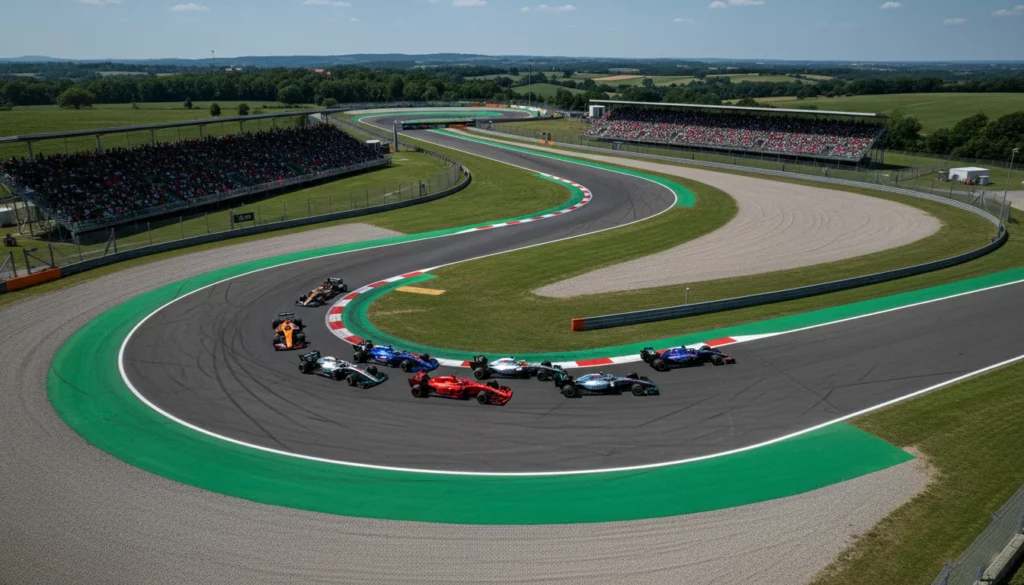
Permanent circuits — Purpose-built racing facilities like Silverstone (the birthplace of F1, hosting races since 1950), Monza (the “Temple of Speed” in Italy), Suzuka (Japan’s legendary figure-of-eight track), and Spa-Francorchamps (Belgium’s epic 7km circuit through the Ardennes forest).
Night races — Bahrain, Singapore, Las Vegas, and Qatar race under floodlights, creating a unique visual spectacle and a completely different atmosphere.
For a deep dive into the greatest venues, read our guide to the best F1 circuits in the world ranked.
Strategy — Why Races Aren’t Just About Speed
One of the things that surprises new fans is how much strategy affects the outcome of a race. The fastest car doesn’t always win.
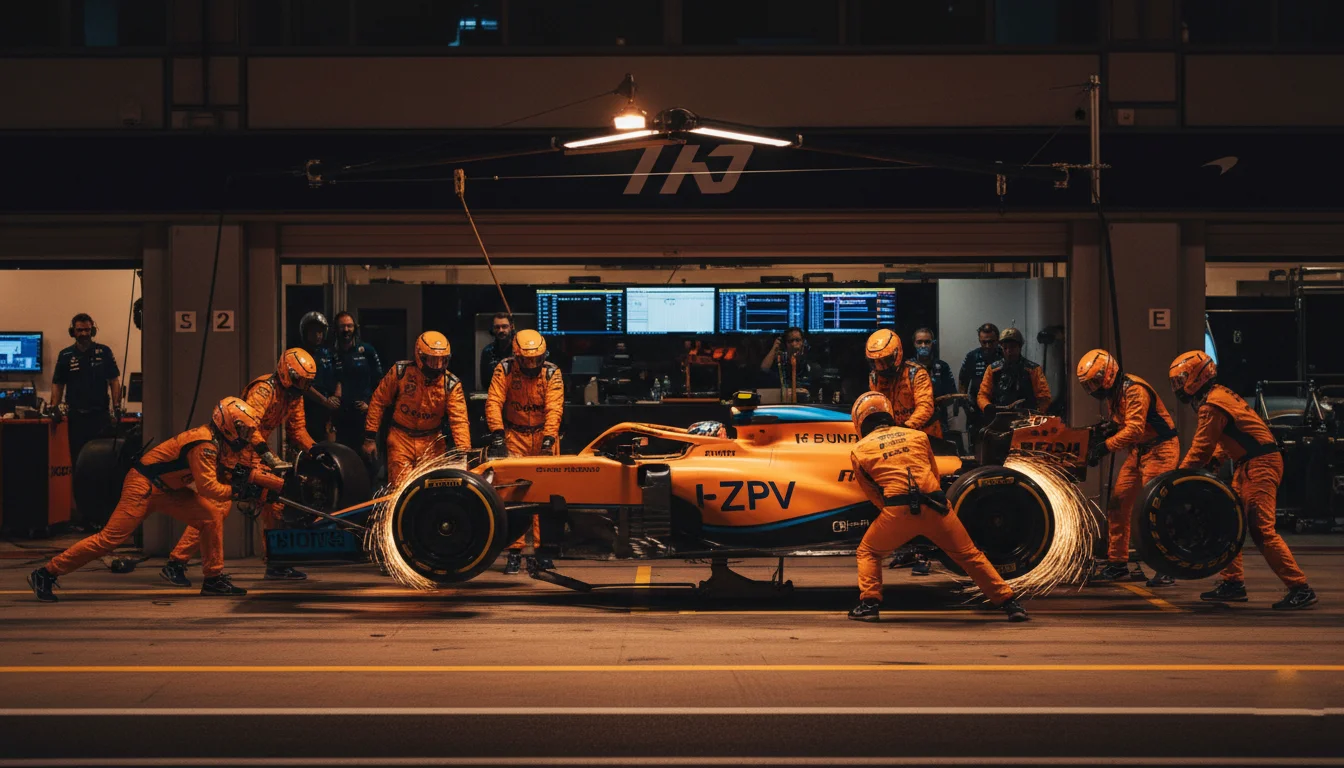
Tyre strategy is the biggest factor. Teams must decide when to bring their driver in for fresh tyres (a “pit stop,” which takes around 2–3 seconds for the tyre change alone), which compound to switch to, and how aggressively to push the current set. A well-timed pit stop can gain or lose multiple positions.
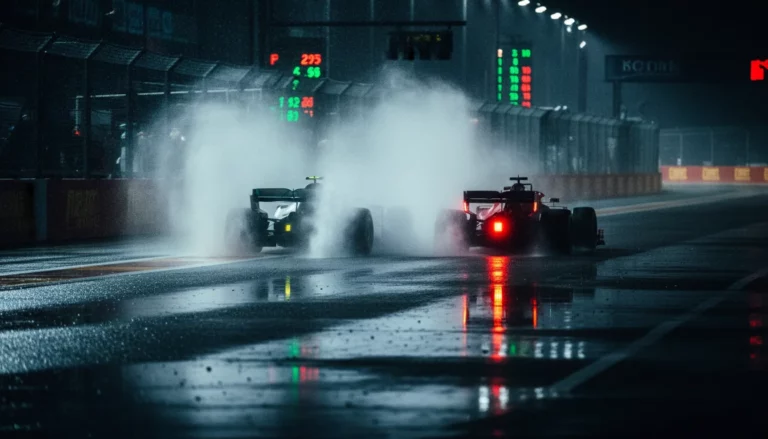
Weather transforms races entirely. When it rains, teams must switch to wet-weather tyres — and the driver who adapts fastest to the changing conditions often emerges victorious regardless of car performance. Some of the greatest drives in F1 history have come in the rain — Ayrton Senna at Donington in 1993, Verstappen in Brazil in 2024.
Safety cars and red flags can reshape a race in an instant. When there’s an incident on track, a safety car is deployed, bunching the field together and wiping out any gaps that leading drivers had built. This creates dramatic restarts and often produces unexpected results.
Energy management is a new strategic dimension for 2026. With the increased reliance on electrical power, drivers must carefully manage battery energy throughout a lap and across a race. Using too much energy early can leave a driver vulnerable in the closing stages. This adds a chess-like layer of thinking on top of the physical act of driving.
The Language of F1 — Key Terms Explained
F1 has its own vocabulary. Here are the essential terms every new fan should know:
Pole position — First place on the starting grid, earned through qualifying. Starting at the front is a huge advantage.
Podium — The top three finishers at each race. Standing on the podium is a significant achievement.
Active aero — New for 2026. The car’s wings adjust automatically between “Corner Mode” (maximum downforce) and “Straight Mode” (minimum drag). Replaces the old DRS system.
Overtake Mode — When a driver is within one second of the car ahead at a detection point, they receive extra electrical power on the following lap to help them overtake.
Boost button — A button drivers can press at any time to deploy maximum power from the battery, useful for both attacking and defending.
Undercut — Pitting before a rival to gain track position by running on fresher tyres while they’re still on worn rubber.
Overcut — The opposite: staying out longer than a rival, hoping to gain time on a clear track before pitting.
DNF — Did Not Finish. When a driver retires from a race due to mechanical failure, crash, or other issues.
Grand slam — When a driver takes pole position, wins the race, sets the fastest lap, and leads every lap. Extremely rare.
The History — Why F1 Matters
Formula 1 has been running since 1950, making it one of the oldest world championships in sport. Its history is rich with legendary names, dramatic rivalries, and moments of brilliance that have shaped sporting culture worldwide.
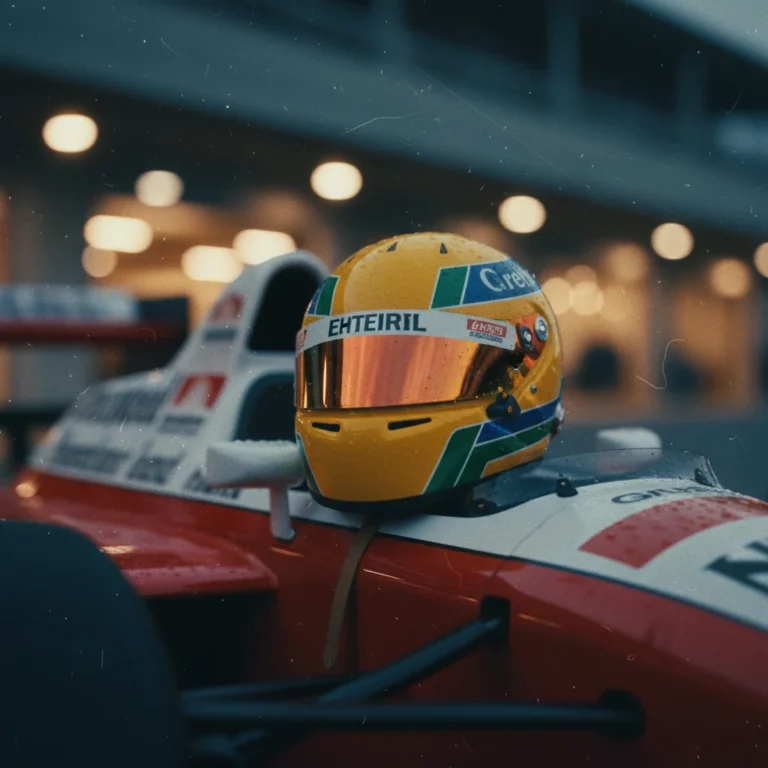
Ayrton Senna — The Brazilian genius, widely considered the greatest natural talent the sport has ever seen. Three championships, 41 victories, and a tragic death at Imola in 1994 that changed F1 forever.
Michael Schumacher — The German record-breaker who won seven championships and redefined what it meant to be a complete racing driver. His dominance with Ferrari in the early 2000s set benchmarks that stood for nearly two decades.
Lewis Hamilton — The all-time leader in race wins and joint-record holder in championships. Hamilton broke down barriers as F1’s first Black champion and has been the sport’s defining figure for a generation.
Sebastian Vettel — Four consecutive titles with Red Bull from 2010–2013. Retired in 2022 and remains one of the most popular drivers in the sport’s history.
Niki Lauda — Three-time champion who survived a horrific crash at the Nürburgring in 1976 and returned to racing just six weeks later, one of the most courageous comebacks in sporting history.
Nigel Mansell — Britain’s moustachioed hero who finally won his championship in 1992 with Williams, becoming one of the most beloved drivers in British motorsport history.
For the full story on F1’s greatest, read our articles on why Ayrton Senna is considered the greatest F1 driver ever and Max Verstappen’s record-breaking dominance.
How to Watch F1
In the UK, Formula 1 is broadcast live on Sky Sports F1, with highlights available free-to-air on Channel 4. Sky’s coverage includes every practice session, qualifying, and race, with expert analysis from former drivers and engineers.
F1 TV Pro is Formula 1’s own streaming service, offering live coverage, onboard cameras for every driver, and full access to the historical archive. It’s an excellent option for fans who want to watch on mobile devices or dig into the data.
Race start times vary depending on the location of the Grand Prix. European races typically start in the early-to-mid afternoon UK time, while races in Asia, the Americas, and the Middle East may be earlier in the morning or late at night.
How to Get Involved as a Fan
Being an F1 fan extends far beyond watching races on television. Here are some ways to immerse yourself in the sport:
Pick a team or driver. The easiest way to get invested is to pick someone to support. Whether it’s Hamilton at Ferrari, Verstappen at Red Bull, or an underdog like Williams, having a rooting interest transforms your viewing experience.
Follow social media. F1 teams and drivers are incredibly active on social media. Following your favourite driver’s Instagram, YouTube, or TikTok gives you behind-the-scenes access that didn’t exist a decade ago.
Listen to podcasts. Shows like “Beyond the Grid” (F1’s official podcast), “Shift+F1”, and Sky’s “Sky Sports F1 Podcast” offer accessible, entertaining weekly analysis.
Build your fan space. One of the fastest-growing trends among F1 fans is creating dedicated spaces in their homes — gallery walls of F1 posters, model car collections, and race-day viewing setups. Read our full guide on how to create the ultimate F1 fan room.
Play F1 games. The official F1 video game series lets you drive every circuit on the calendar, manage tyre strategy, and compete online. It’s a brilliant way to learn the tracks and understand what drivers deal with on race day.
Attend a race. There’s nothing quite like experiencing an F1 race in person. The sound, the speed, and the atmosphere are impossible to replicate on screen. The British Grand Prix at Silverstone and the Italian Grand Prix at Monza are particularly famous for their passionate crowds.
What Makes F1 Special?
Formula 1 sits at the intersection of sport, engineering, and entertainment in a way that nothing else does. It’s a team sport disguised as an individual one — behind every driver is a team of 800+ engineers, mechanics, strategists, and designers working to build and operate the fastest car possible.
It’s also a genuinely global sport. In a single season, F1 visits Europe, Asia, the Middle East, North America, South America, and Oceania. The fan base spans every continent and every demographic, from lifelong enthusiasts to new fans who discovered the sport through social media and Netflix.
And it never stands still. The 2026 season brings the most significant regulation changes in F1 history — new engines, new aerodynamics, new teams, and new technology that will reshape the competitive order entirely. If you’re starting to watch now, you’re arriving at the perfect moment. The slate has been wiped clean, and nobody knows what comes next.
That uncertainty — that promise of the unexpected — is exactly what makes Formula 1 the greatest show on earth.
Start your F1 journey with premium Formula 1 posters from Poster Print Base. From Senna to Verstappen, our F1 driver posters are printed on premium 250gsm paper, available in A3, A2, and A1 sizes, with free UK delivery on every order. Browse the full sports poster collection.
Explore more F1 content: The Evolution of F1 Car Design | The 10 Most Iconic F1 Liveries of All Time | Lewis Hamilton’s Career in Pictures | The Best F1 Circuits Ranked