10 Most Iconic Formula 1 Liveries of All Time
From tobacco-funded masterpieces to modern hybrid-era stunners — the colour schemes that defined the sport.
A great Formula 1 car is more than engineering. It’s a visual icon. The livery — the paint scheme, the colours, the way the sponsor logos sit against the bodywork — is what burns a car into your memory long after the season is over. Close your eyes and think of Ayrton Senna, and chances are you’re picturing the red and white of Marlboro McLaren. Think of the 1970s, and it’s black and gold. Think of Jordan, and it’s that impossible green and blue.
Some liveries become so iconic that they transcend the sport entirely. They appear on bedroom walls, in video games, on model cars — and, of course, on Formula 1 posters. They become shorthand for entire eras of racing.
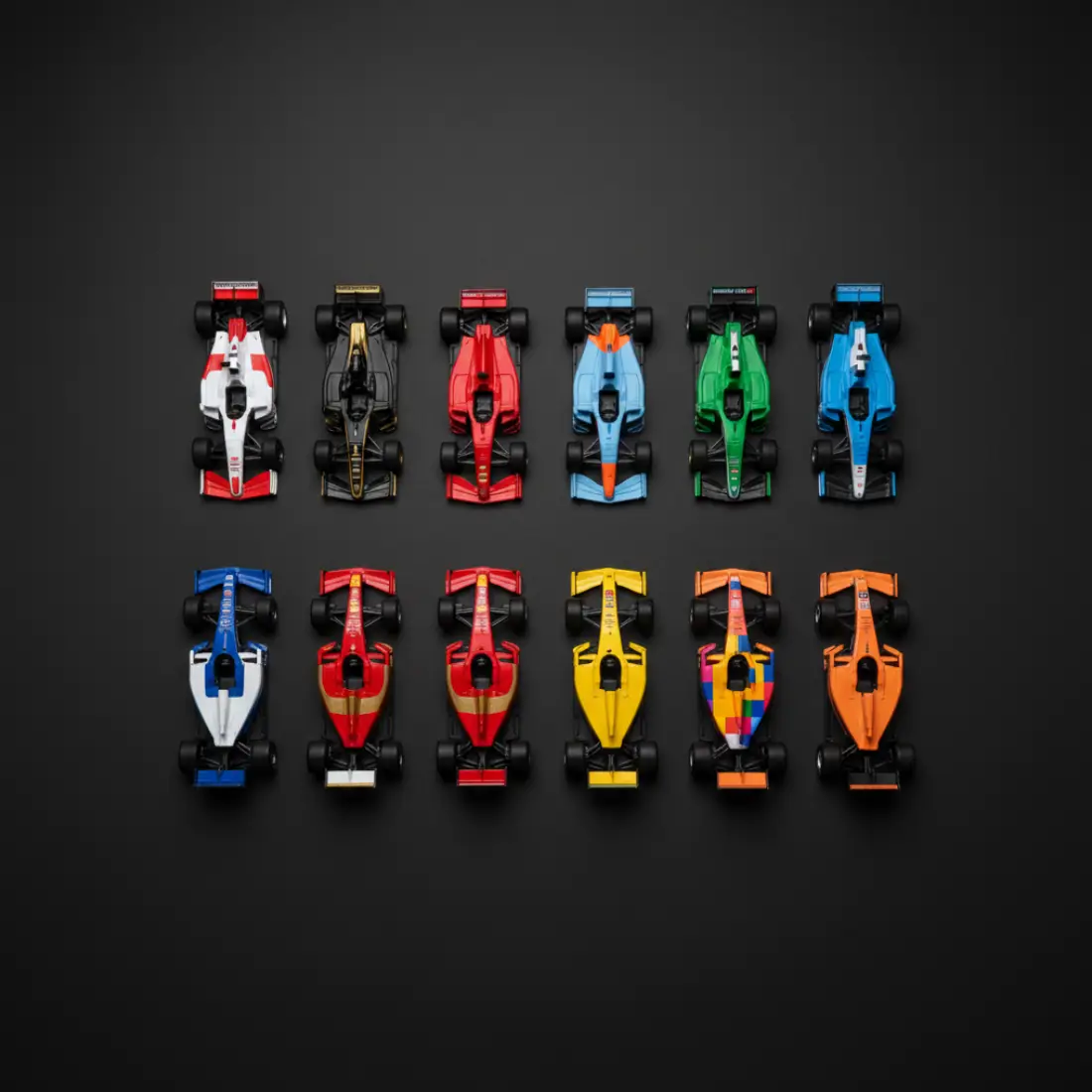
Here are the ten most iconic F1 liveries of all time — the colour schemes that defined the look, the feel, and the soul of Formula 1.
1. Marlboro McLaren (1974–1996) — The Red and White Machine
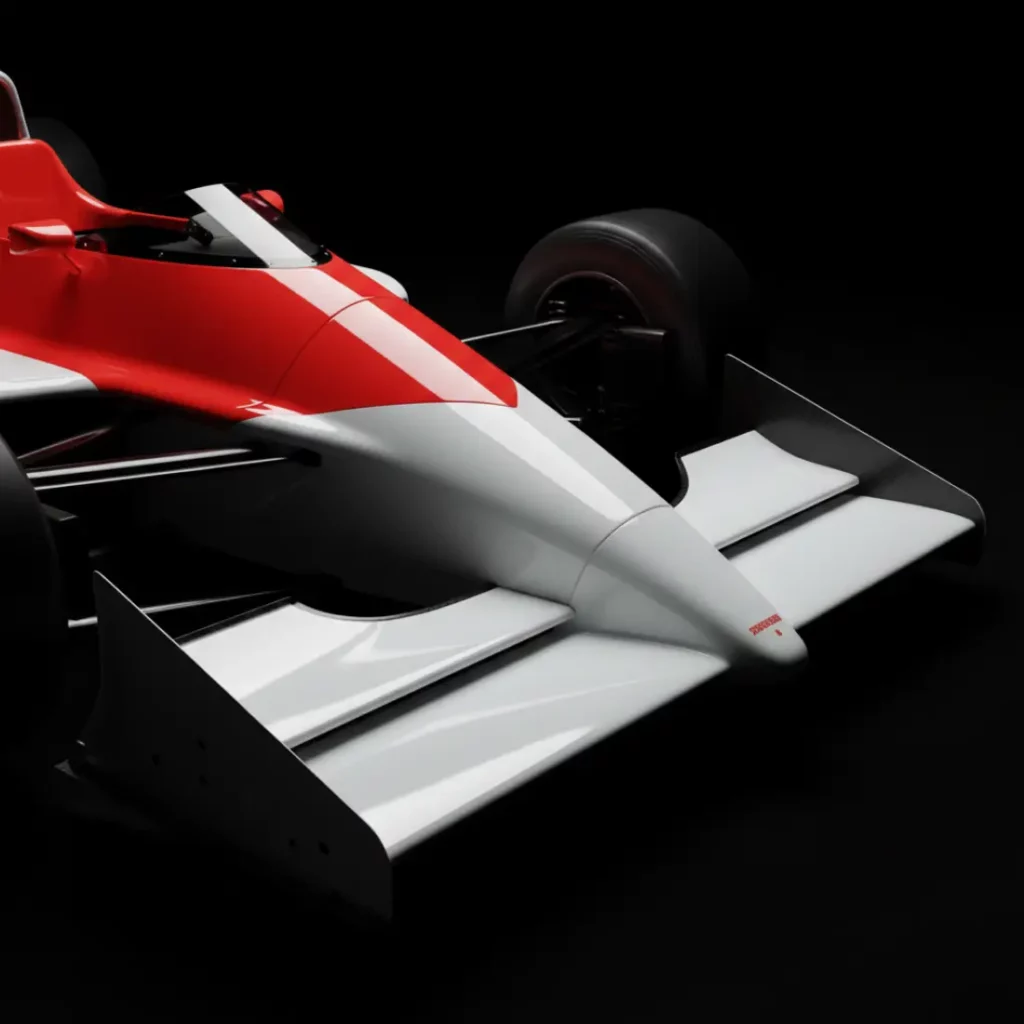
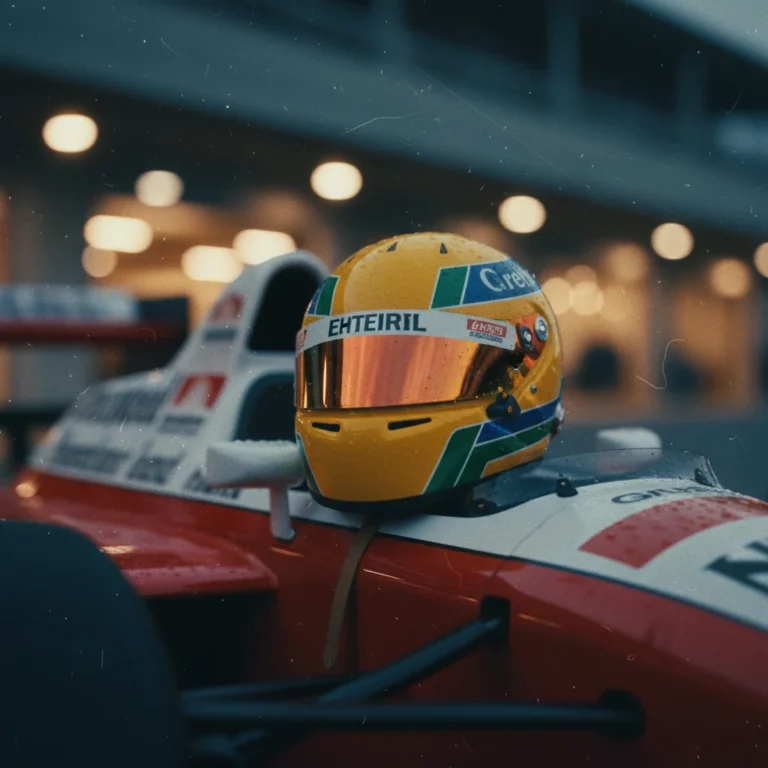
No livery in the history of motorsport has been associated with more success than the Marlboro McLaren. For 23 consecutive seasons — the longest title sponsorship in F1 history at the time — the red and white chevron adorned what was often the fastest car on the grid.
The simplicity is what made it timeless. A clean red-over-white split, the Marlboro chevron on the engine cover, and the McLaren name running along the sidepods. No clutter, no unnecessary complexity — just two colours and one of the most recognisable brand marks in the world.
Seven of McLaren’s eight Constructors’ Championships were won in Marlboro colours. The livery was worn by some of the greatest names ever to sit in a cockpit: Emerson Fittipaldi, James Hunt, Niki Lauda, Alain Prost, and of course Ayrton Senna. Senna’s partnership with the Marlboro McLaren — particularly the dominant McLaren-Honda MP4/4 of 1988, which won 15 of 16 races — remains one of the defining images of the sport.
Even today, decades after tobacco sponsorship left F1, fans still refer to the “Marlboro McLaren era” as the gold standard of livery design. It proved that in a sport obsessed with complexity, less really is more.
2. John Player Special Lotus (1972–1986) — Black and Gold Perfection
If the Marlboro McLaren is the most successful livery, the JPS Lotus is the most beautiful. The combination of jet black bodywork with gold pinstriping and the John Player Special logo created something that looked less like a racing car and more like a piece of art deco jewellery doing 180mph.
The livery first appeared on the Lotus 72 in 1972 and remained — with variations — through to the mid-1980s. It never actually adorned a World Championship-winning car (the timing just missed Lotus’s title-winning years), but that hasn’t dimmed its legend one bit. Images of Ronnie Peterson throwing a black and gold Lotus sideways through corners are among the most reproduced photographs in motorsport history.
The JPS Lotus proved that a racing car could be genuinely glamorous. It influenced everything from model car design to fashion, and it remains the livery that designers and artists return to time and again when they want to capture the romance of 1970s Formula 1.
3. Ferrari Rosso Corsa (1950–Present) — The Eternal Red
Ferrari isn’t just a team — it’s a religion. And the colour red isn’t just a livery — it’s the very identity of the Scuderia. Rosso corsa — Italian racing red — has been part of Formula 1 since the first World Championship race in 1950, and it remains as powerful today as it was seven decades ago.
Unlike every other entry on this list, Ferrari’s red isn’t the result of a sponsorship deal. It originates from the early 20th century convention of assigning national racing colours — red for Italy, British Racing Green for Britain, blue for France, silver for Germany. While every other team eventually abandoned their national colours in favour of sponsor liveries, Ferrari held firm. The red stayed.
The specific shade has evolved over the years — from the deep, almost burgundy hues of the 1950s and 1960s to the brighter, more vivid reds of the Schumacher era, and the darker cherry tones seen on Charles Leclerc and Carlos Sainz‘s recent machines. For 2025, Lewis Hamilton‘s move to Scuderia Ferrari has added yet another chapter to this storied lineage.
Legends like Niki Lauda in his Ferrari 312T, Gilles Villeneuve, and Michael Schumacher have all been immortalised in red. It’s the colour of passion, speed, and the relentless pursuit of victory. No other team could get away with running essentially the same colour for 75 years. But then again, no other team is Ferrari.
4. Gulf Racing Blue and Orange (1968–Present) — The Colour of Cool
Strictly speaking, the Gulf livery’s deepest roots are in endurance racing — the Ford GT40s and Porsche 917s at Le Mans — but its influence on F1 is undeniable. McLaren first carried Gulf Oil sponsorship in 1968 for both F1 and Can-Am, and the combination of powder blue and tangerine orange has become arguably the single most recognisable colour scheme in all of motorsport.
The livery returned to the F1 grid in dramatic fashion when McLaren ran a one-off Gulf tribute at the 2021 Monaco Grand Prix, and again for their 2023 triple crown livery. Each time, it sent the internet into meltdown — proof that the Gulf colours have a near-mystical power to captivate fans.
A significant part of Gulf’s cultural cachet comes from Steve McQueen’s 1971 film Le Mans, where his character raced in Gulf colours. That Hollywood connection elevated the livery from a corporate sponsorship into a pop culture icon. More than fifty years later, the blue and orange remain the gold standard — or rather, the tangerine standard — of racing aesthetics.
The 10 Most Iconic F1 Liveries at a Glance
Colours, teams, eras, and the legendary drivers who made them famous
| # | Livery | Team | Era | Colours | Famous Drivers | Why It’s Iconic |
|---|---|---|---|---|---|---|
| 1 | Marlboro | McLaren | 1974–96 |
|
Senna, Prost, Hunt, Lauda | 7 Constructors’ titles. The most successful livery in F1 history. |
| 2 | John Player Special | Lotus | 1972–86 |
|
Peterson, Andretti, Mansell | The most beautiful livery ever. Black and gold perfection. |
| 3 | Rosso Corsa | Ferrari | 1950–now |
|
Lauda, Schumacher, Leclerc, Hamilton | 75 years of Italian racing red. The identity of motorsport itself. |
| 4 | Gulf Oil | McLaren / Various | 1968–now |
|
Hulme, Norris (tribute) | The most recognisable motorsport colour scheme ever created. |
| 5 | 7Up | Jordan 191 | 1991 |
|
de Cesaris, Schumacher (debut) | Blue and green proved critics wrong. The most beautiful debut car. |
| 6 | Rothmans | Williams | 1994–97 |
|
Hill, Villeneuve, Senna | Royal blue and gold. Two titles. Regal and commanding. |
| 7 | Gold Leaf | Lotus 49 | 1968–71 |
|
Hill, Rindt | The first-ever sponsored F1 car. Changed the sport’s financial model. |
| 8 | Canon / Camel | Williams FW14B | 1991–92 |
|
Mansell, Patrese | Red Five. Every British kid’s Scalextric hero. 1992 domination. |
| 9 | United Colors | Benetton B188 | 1988–95 |
|
Schumacher, Piquet | Fashion brand meets F1. Four bold colours that worked brilliantly. |
| 10 | Papaya / Carbon | McLaren | 2021–now |
|
Norris, Piastri | Heritage colour reborn. 2024 Constructors’ champions. |
5. Jordan 191 — 7Up Green and Blue (1991)
Blue and green should never be seen. That’s the old saying. The Jordan 191 smashed that rule to pieces.
Eddie Jordan’s debut F1 car, designed by Gary Anderson, was one of the most beautiful chassis ever to grace a grid. Its clean, sculpted lines were the perfect canvas for a livery that shouldn’t have worked but absolutely did. After a planned Camel tobacco deal fell through, Jordan struck a deal with 7Up instead, and designer Ian Hutchinson created a two-tone scheme — rich green on top fading into deep blue below — with white rear wing elements carrying the Fuji Film logo.
The green was a nod to Jordan’s Irish heritage and Ireland’s national tourism board, who were also sponsors. The result was stunning: fresh, distinctive, and utterly unlike anything else on the 1991 grid. The car itself was no slouch either — Andrea de Cesaris came agonisingly close to winning at Spa, and a young Michael Schumacher made his F1 debut in the car at the same circuit.
The Jordan 191 has been voted one of the most beautiful F1 cars ever made. Eddie Jordan sadly passed away in early 2025, but his legacy — both as a team owner and as the man who gave the sport one of its most beloved liveries — lives on.
6. Rothmans Williams (1994–1997) — Blue, White, and Gold Royalty
Williams in the 1990s was a powerhouse, and the Rothmans livery gave the team a look to match its performance. Deep royal blue as the base, white panels, and gold Rothmans branding created a livery that was regal, commanding, and unmistakably Williams.
The livery debuted on the FW16 in 1994 — a season tragically marked by the death of Ayrton Senna at Imola — and continued through to the FW19 that Jacques Villeneuve drove to the 1997 World Championship. Damon Hill also won his sole title in Rothmans colours in 1996.
What made the Rothmans Williams so effective was how the colour blocking worked with the car’s aerodynamic shapes. The blue covered the lower body and sidepods, the white sat on top, and the gold provided sharp accent lines that caught the light beautifully. It was a masterclass in using colour to accentuate a car’s form.
Along with the Canon Williams of the Mansell era — Nigel Mansell and his famous Red Five — Williams has one of the richest visual histories of any team on the grid.
7. Lotus 49 — Gold Leaf (1968) — The First Sponsored F1 Car
Before 1968, Formula 1 cars were painted in their national racing colours — green for Britain, red for Italy, blue for France. That all changed when Colin Chapman struck a deal with Gold Leaf cigarettes and the Lotus 49 appeared at the Spanish Grand Prix in a striking red and gold livery.
It was the first commercially sponsored car in F1 history, and it changed the sport forever. The deal opened the floodgates for corporate sponsorship money, transforming F1 from a gentleman’s pursuit into a global commercial enterprise. Without the Gold Leaf Lotus, there would be no Marlboro McLaren, no JPS, no Red Bull — the entire financial model of modern F1 traces back to this single car.
Beyond its historical significance, the livery itself was gorgeous. The red was a warm, orangey tone quite different from Ferrari’s traditional Italian red, and the gold accents gave it an air of sophistication. The Lotus 49 was already one of the most successful cars of its era, and the Gold Leaf colours gave it an identity that purists mourned when it eventually gave way to the JPS black and gold.
8. Canon/Camel Williams FW14B (1992) — Mansell’s Mighty Chariot
Ask any British F1 fan over the age of 35 about the Williams FW14B, and their eyes will light up. The car that carried Nigel Mansell to a dominant 1992 World Championship is one of the most beloved in the sport’s history — and its livery is a huge part of the reason why.
The yellow, blue, and white colour scheme — driven by title sponsor Canon and co-sponsor Camel — was simple but perfectly balanced. The yellow dominated the sidepods and engine cover, the blue sat beneath, and white panels carried the Canon logos. And then there was the famous Red Five — Mansell’s number, proudly displayed on the nose cone in bold red, becoming one of the most iconic visual elements in F1 history.
Adrian Newey’s FW14B was a technological marvel — active suspension, traction control, semi-automatic gearbox — and it dominated the 1992 season so comprehensively that Mansell clinched the title with five races still to go. Every child in Britain had a Scalextric replica, and attempted to recreate the legendary Monaco battle between Mansell and Senna in their bedroom. That image — the yellow and blue Williams chasing the red and white McLaren through the streets of Monte Carlo — is F1 distilled to its purest form.
9. Benetton B188 (1988) — United Colors on Track
As a fashion house, Benetton understood visual identity better than almost any other sponsor in F1. And the B188 livery — with its bold blocks of green, blue, yellow, and white — was the most visually distinctive car on the 1988 grid.
The “United Colors of Benetton” philosophy translated perfectly onto a racing car. Where other teams used one or two colours, Benetton used four, splitting the bodywork into clean geometric sections that made the car instantly recognisable from any angle and at any speed. It was eye-catching without being garish — a difficult balance that most multi-colour liveries fail to achieve.
The Benetton team would later become famous for nurturing Michael Schumacher, winning two Drivers’ Championships and a Constructors’ title with the German in 1994–95. The team eventually evolved into Renault and then Alpine, but the original Benetton colours remain among the most fondly remembered in F1 history.
10. McLaren Papaya and Carbon (2021–Present) — The Modern Classic
McLaren’s return to papaya orange — the original colour chosen by founder Bruce McLaren in the 1960s — has been one of the great livery success stories of modern F1.
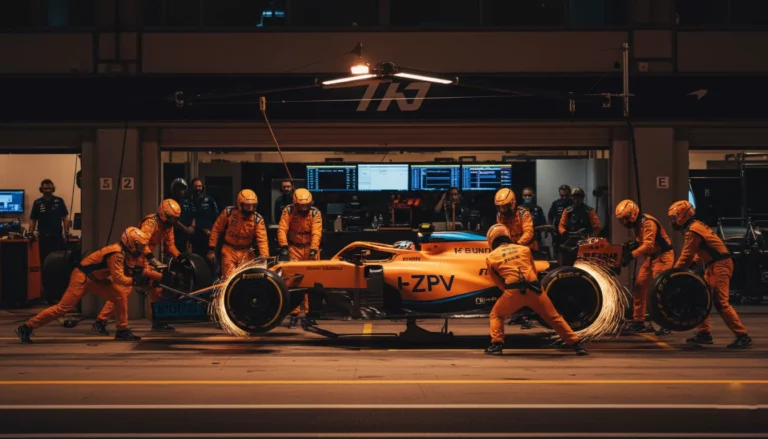
After years of silver, chrome, and various sponsor-led colour schemes, McLaren reintroduced papaya in 2018 and has refined it into one of the best-looking liveries on the current grid. The 2024–2025 iteration — papaya over bare carbon fibre with black accents — helped carry Lando Norris and Oscar Piastri to McLaren’s first Constructors’ Championship in over two decades.
The papaya works because it’s bold without being aggressive. It photographs beautifully, pops on television, and connects the team’s present to its heritage in a way that feels authentic rather than forced. In 2025, McLaren kept the design largely unchanged — a rare show of restraint in a paddock where teams love to tinker. When something works this well, you leave it alone.
The modern papaya McLaren proves that you don’t need tobacco money or flashy graphics to create an iconic livery. Sometimes you just need to go back to your roots.
Quick Reference: The 10 Most Iconic F1 Liveries
Copy and paste the HTML table below into a WordPress Custom HTML block to display this in your article.
Honourable Mentions
Several legendary liveries just missed the cut. The Mercedes Silver Arrows of the 2010s and 2020s — particularly the all-black “End Racism” livery of 2020 — deserves recognition, as does the Camel Lotus of the Senna era (1987–1989), which swapped JPS black for a clean yellow and blue scheme that many fans consider just as iconic. The Warsteiner Arrows (1978–1981) proved that gold could work on an F1 car, and Red Bull‘s deep navy with red and yellow accents has become one of the most instantly recognisable modern identities — even if fans have been begging for a refresh.
Sebastian Vettel‘s four title-winning years at Red Bull (2010–2013) and Max Verstappen‘s recent dominance with Red Bull Racing have cemented that livery’s place in history — even if its fans wish the team would take a few more design risks.
And Aston Martin‘s return to the grid in British Racing Green — with Fernando Alonso leading the charge — has been a welcome addition to a grid that desperately needed more colour variety.
Why F1 Liveries Make the Best Wall Art
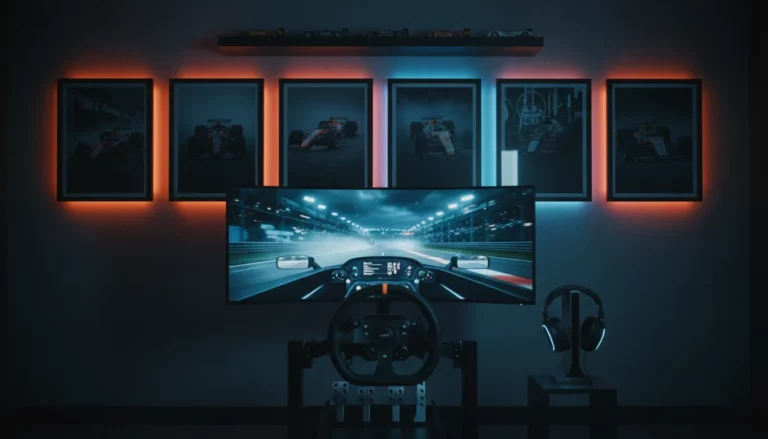
There’s a reason Formula 1 posters are among the most popular wall art choices for bedrooms, offices, and man caves. The liveries are inherently visual — bold colours, dramatic shapes, and iconic branding that looks just as striking on a wall as it does at 300km/h.
At Poster Print Base, our sports poster collection features a growing range of premium F1 prints celebrating the drivers, teams, and liveries that have defined the sport — from vintage F1 legends like Ayrton Senna, Niki Lauda, Sir Jackie Stewart, and Gilles Villeneuve, to modern stars like Lewis Hamilton, Max Verstappen, Charles Leclerc, Lando Norris, and Fernando Alonso.
Every poster is printed on premium 250gsm glossy, fade-resistant photo paper with high-resolution digital printing, available in A3, A2, and A1 sizes with free UK delivery.
Browse the full Formula 1 poster collection →
Love motorsport? Explore our full range of sports posters or discover more motorsport prints and racing wall art at Poster Print Base.